
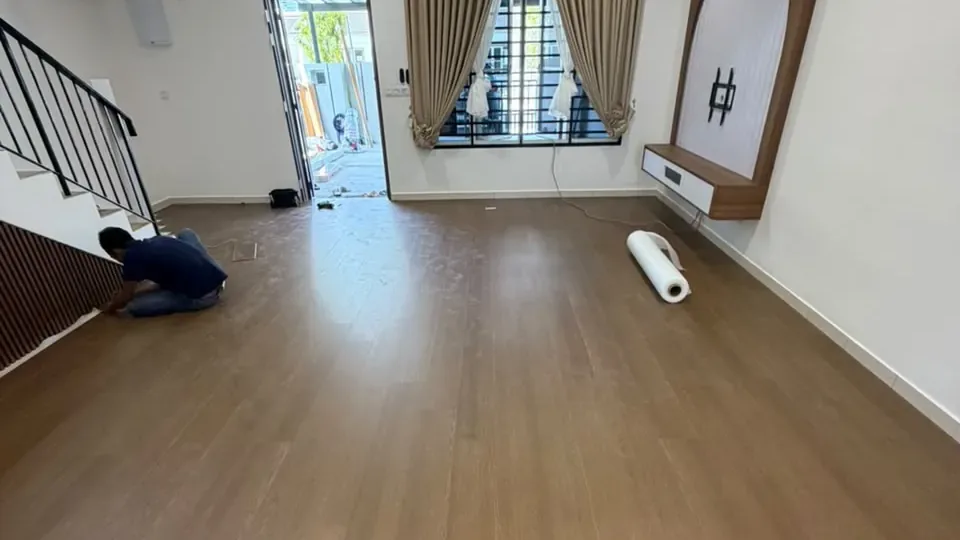
A new SPC floor should feel solid underfoot, with tight joints and quiet steps. When planks start to lift, open at the seams or make a hollow or clicking sound, something underneath or around the floor usually needs attention.
This guide explains the common reasons SPC flooring lifts, separates or makes noise in Klang Valley homes and shops, what you can check yourself, and when it is time to send photos to an installer.
Noticing lift, gaps or noise in your SPC floor?
Send a few photos of the affected area and a short note on when it started. We’ll help you work out what to check next.
Lift, Gaps and Noise at a Glance
| Symptom | Common causes | First things to check |
|---|---|---|
| Planks lifting or cupping | Moisture under the floor, uneven subfloor, heat near glass | Any leak, damp patch or recent flooding; high spots in the floor |
| Joints opening / separating | Missing expansion gap, sun and AC swings, incomplete click-lock | Gaps at walls and doorways; whether the gap appears after hot afternoons |
| Hollow sound when you walk | Underlay not flat, uneven prep, air pockets | Whether the sound is in one spot or across a whole bay |
| Click or knock at joints | Planks not fully locked, movement at transitions | Soft taps along the joint; movement near trims and doorways |
| Squeak or rub | Rubbing on a high spot, skirting pinning the float, debris under a plank | Whether the floor can still move slightly at the walls |
Why SPC Flooring Lifts or Cups
When a plank edges up, or the centre of a plank rises while the edges stay down, homeowners usually call it lifting or cupping. In floating SPC floors, the usual causes are:
- Moisture under the floor. A slow leak from a bathroom, kitchen or AC drain, or dampness on a ground-floor slab, can push moisture under the planks. SPC is water-resistant on the surface, but standing water underneath is a different problem. See is SPC flooring waterproof? for the everyday-spill vs flood distinction.
- Uneven or soft subfloor. High spots, soft patches or loose old tiles leave the plank unsupported. Over time the click edges can stress and the plank can lift. If you are laying over old tiles, read can SPC flooring be installed over existing tiles?.
- Heat and direct sun. Large west-facing glass doors in landed homes can warm the floor in the afternoon. Combined with a tight expansion gap, that can encourage peaking at joints. Our SPC flooring for landed homes guide covers sun-facing rooms.
- Heavy point loads on a floating floor. Fixed kitchen islands, very heavy safes or built-ins that pin the floor can stop it from expanding and cause peaking nearby.

Why Joints Separate or Open Up
Gaps that appear between planks, or between the floor and a doorway trim, are often called separation. Common causes in Malaysian homes and shops:
- Expansion gaps that were skipped or filled. SPC is a floating floor. It needs a small gap at walls, fixed cabinets and some doorways so the floor can move with temperature and humidity. If that gap is missing, or later filled with silicone or tightly pinned by skirting, joints elsewhere can open.
- Click-lock not fully seated. If a row was not locked tightly during install, joints can work open under foot traffic. Our step-by-step guide to what happens during SPC flooring installation shows how rows should lock.
- Temperature swings. Strong afternoon sun followed by cold AC overnight can open and close joints slightly. A well-seated floor with proper gaps usually recovers; a poorly locked floor may not.
- Movement at transitions. Doorways, wet-area edges and stair nosings are where gaps show first if trims were rushed.

Why SPC Flooring Sounds Hollow, Clicks or Squeaks
Noise does not always mean the product is failing. It usually means something is moving or not supported:
- Hollow sound. Often underlay that is not flat, a high or low spot in the subfloor, or a small air pocket under a plank. Walk the floor slowly and mark where the sound is loudest.
- Click at the joint. Usually a click-lock edge that is not fully engaged, or two planks rubbing as you step across the seam.
- Squeak or rub. Can come from a plank rubbing on a high tile lip, debris left under the floor, or skirting that was nailed too tight and is pinning the float.
In condos, hollow spots sometimes appear over old tile joints if levelling was light. In shops, heavy rolling loads can stress joints that were not locked tightly on day one.
Hearing a hollow or clicking sound in one area?
WhatsApp us a short video while you walk across the spot, plus photos of the joints and nearby walls. That helps us tell prep issues from seating issues.
What You Can Check Yourself vs What Needs an Installer
Safe for a homeowner to check:
- Any damp patches, recent leaks or AC drip trays overflowing near the area
- Whether the problem appeared after heavy rain, a plumbing job or a renovation next door
- Strong afternoon sun on that bay of floor, and whether blinds are usually open
- Whether skirting or silicone seems to pin the floor tightly to the wall
- Clear photos of the lifted plank, open joint or the spot that sounds hollow
- A short video walking across the noisy area
Leave to an installer:
- Lifting planks to inspect the underlay or subfloor
- Re-locking or replacing click-lock edges
- Levelling high spots or repairing soft subfloor
- Adjusting expansion gaps, trims and doorway transitions
- Deciding whether a local repair or a wider re-lay is needed
If the floor is still under a product and installation warranty, check the terms before anyone else works on it. Our guide to SPC flooring warranty questions lists what to ask and what paperwork to keep.
When to WhatsApp Photos (and What to Send)
Send photos early if:
- A plank is clearly lifted or peaking
- A joint has opened and is catching dirt or a shoe edge
- The hollow or click sound is getting worse
- You can smell dampness or see water marks near the floor
- The problem sits at a bathroom, kitchen or balcony doorway
Helpful to include:
- Your area (e.g. PJ, Subang, Shah Alam, Klang)
- Condo, landed home or shop
- Approx size of the affected area
- Current floor under the SPC if you know it (tiles, cement, other)
- When you first noticed the issue
- 3–5 photos plus a short video of any noise
At Lantai Living we supply and install SPC flooring, and we offer free site measurement across the Klang Valley. Photos first often save a wasted visit when the cause is obvious from the images. To see the options we install, visit our SPC flooring page, or contact us to arrange a site visit.
FAQ
Why is my SPC flooring lifting in one corner?
A single corner often points to a local cause: moisture near a wet area, a high spot in the subfloor, or the floor being pinned too tightly at that wall. Photos of the corner, the nearby skirting and any damp signs help narrow it down.
Why are gaps appearing between SPC planks?
Gaps usually mean the click-lock was not fully seated, the floor does not have enough expansion space, or temperature swings are moving a floor that cannot float freely. An installer can check seating and gaps without guessing from afar.
Why does my SPC floor sound hollow when I walk?
Hollow sounds often come from uneven subfloor prep, underlay that is not flat, or a small unsupported area under the plank. Mark the loudest spots and share a short walking video with an installer.
Can heat or sunlight make SPC flooring separate?
Strong sun through large glass doors can warm the floor and encourage movement. Combined with tight expansion gaps, that can open joints. Blinds or curtains in the hottest hours help, but an installer should still check the gaps and lock.
Should I try to glue a lifted SPC plank back down?
Usually no. Glue can hide the real cause and complicate a proper repair, especially on a floating floor. Find the moisture, high spot or seating issue first, then let an installer decide the fix.
Ready to Sort Out Lift, Gaps or Noise?
Send us these on WhatsApp and we’ll reply with the next steps:
- Your area (e.g. PJ, Subang, Shah Alam)
- Condo, landed home or shop
- Rooms affected and approx sqft
- Current floor under the SPC if known (tiles, cement, other)
- What you are seeing or hearing (lift / gap / hollow / click)
- 3–5 photos and a short video of any noise
What happens after you WhatsApp us
Reply → review photos → measure if needed → advise
- We reply with follow-up questions about the affected area.
- If a site visit helps, we arrange free measurement in the Klang Valley.
- We explain likely causes and the practical repair or re-lay options for your floor.
- If you are planning a new install instead, we quote supply and installation with clear prep notes.
Supply and install, with free site measurement across the Klang Valley. Send photos first if something already looks or sounds wrong.