
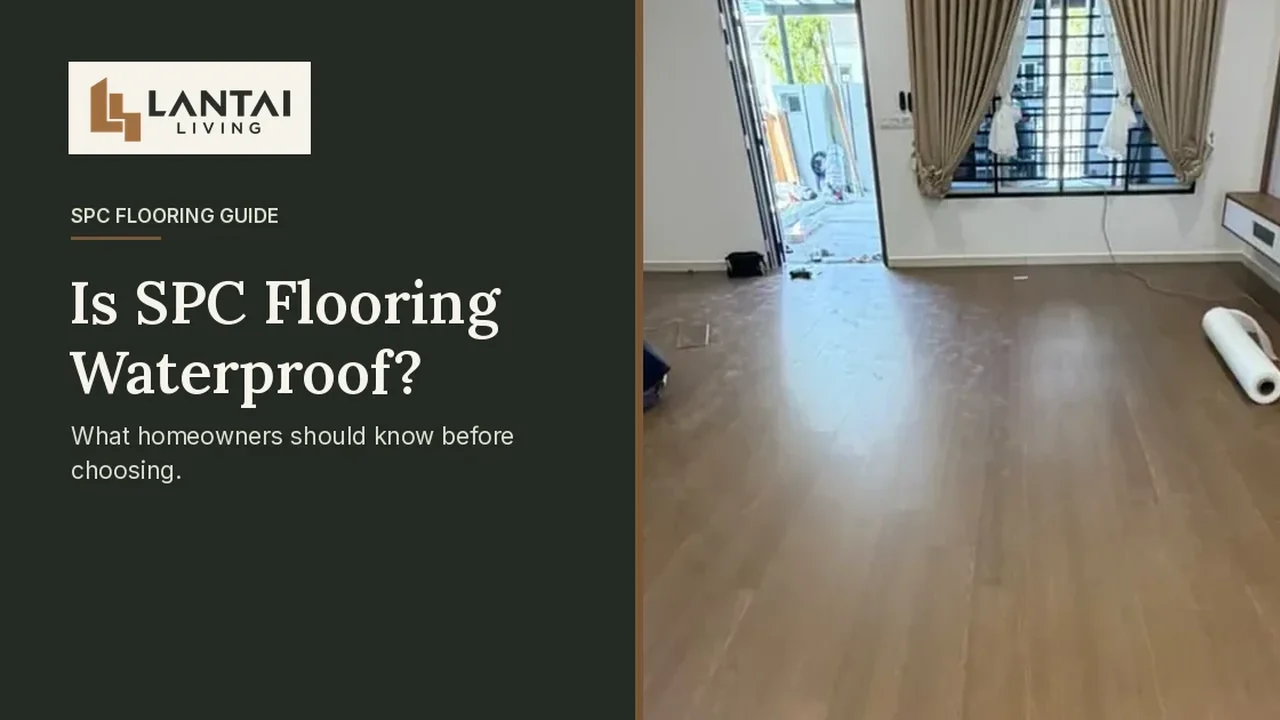
Many homeowners in the Klang Valley choose SPC flooring because it is described as waterproof. That claim is true for everyday surface water, but it is often misunderstood. A waterproof core does not mean every room is suitable, and it does not mean moisture under the floor can be ignored.
This guide explains what “waterproof” usually means for SPC, where it helps in a home or shop, and where you still need tiles, better prep or a different approach, whether you are updating a condo in Petaling Jaya, a terrace in Shah Alam or a shop lot in Subang.
What "Waterproof" Means for SPC Flooring
SPC stands for stone plastic (or stone polymer) composite. The core is a dense, rigid board that does not soak up water the way laminate or engineered wood can. Spills wiped up in a reasonable time, damp mopping and everyday kitchen or dining messes are usually fine on a properly installed SPC floor.
When suppliers say SPC is waterproof, they are mainly talking about the core material resisting surface water. They are not saying the whole floor system is sealed like a tiled wet room, or that water under the floor is harmless.
| What people often hear | What it usually means in practice |
|---|---|
| “SPC is waterproof” | The rigid core does not swell from surface water the way many wood-based floors do. |
| “Suitable for kitchens” | Often yes for dry or lightly wet kitchens, with care around sinks, dishwashers and splash zones. |
| “Fine for Malaysian humidity” | SPC is generally more stable than laminate in humid homes, but a damp slab underneath is still a problem. |
| “Safe for bathrooms” | Usually no for showers and wet bathrooms. Standing water and wet-room detailing are different from spill resistance. |
Room-by-Room: Where SPC Handles Water Well
Use this as a planning guide, not a hard rule. Your existing floor condition and how the room is used decide the final call.
| Room or area | SPC usually OK? | What to watch |
|---|---|---|
| Living, dining, bedrooms, study | Yes, when the floor below is dry and sound | Spills, mopping and everyday use are the main water exposure. |
| Dry kitchen / dry pantry | Often yes | Plan edges around the sink, fridge and dishwasher; wipe standing water. |
| Wet kitchen (frequent wash-down) | Usually prefer tiles | Repeated flooding of the floor is harder on joints, edges and underlay. |
| Bathroom / shower / wet toilet | Not recommended | Standing water, wet walls and floor drains need a tiled wet-room approach. |
| Laundry / utility with machine overflow risk | Case by case | A brief spill is one thing; repeated leaks under cabinets need fixing first. |
| Ground-floor slab with rising damp or past leaks | Investigate first | SPC will not stop moisture coming up from below. |
| Covered porch, balcony, outdoor | Not for SPC interior planks | Use outdoor decking or other exterior products for rain-exposed areas. |

Where SPC Helps Most
- Family living areas. Spills, pets’ water bowls and damp mopping are everyday life. SPC is usually a practical choice here when the base is dry.
- Open-plan living and dining. One continuous floor is easier to keep clean than mixing materials, as long as wet zones are planned at the edges.
- Condos and landed homes with humidity. SPC’s rigid core is generally more stable than laminate in humid Klang Valley homes, provided the slab or existing floor underneath is dry.
- Light commercial / shop floors. Dry retail areas often suit SPC; mopping and drinks spills are normal. Heavy wash-down areas are a different conversation.
What Can Still Go Wrong
Even with a waterproof core, the floor is a system. These are the parts that still need care:
- Joints and click locks. Water that sits for a long time can work into joints. A good lock and clean install help, but they are not a permanent wet-room seal.
- Edges and trims. Where the floor meets walls, cabinets, baths or tiles you keep, water can get under at the perimeter if it is left standing.
- Underlay. Attached or separate foam underlays are for feel and sound. They are not designed to sit in water.
- Subfloor moisture. Moisture rising from a ground-floor slab, or trapped after a leak, can cause smells, mould or underlay damage even when the SPC core itself is fine.
- Flooding and major leaks. After a pipe burst or flood, the floor may need lifting so the base can dry. Waterproof core does not mean “leave water underneath”.
If you are laying over tiles, also read our guide on SPC flooring over existing tiles. Moisture checks and hollow tiles belong in that conversation too.
Common Mistakes About Waterproof SPC
- Choosing SPC for a shower or wet bathroom because the product is labelled waterproof.
- Ignoring damp patches, musty smells or past leaks on a ground floor.
- Leaving water standing at the skirting, under the fridge or at the bathroom door threshold.
- Trapping the floating floor under wet-area cabinets with no plan for leaks.
- Assuming thickness alone makes the floor more waterproof (it does not; see our thickness guide).
- Skipping expansion gaps and then blaming “water damage” when the floor lifts from other causes.
Questions to Ask Before You Confirm
| What to ask before you confirm | Why it matters |
|---|---|
| Which rooms are you recommending SPC for, and which should stay tiled? | Separates spill-resistant living areas from true wet zones. |
| How will edges be finished at the kitchen, bathroom and laundry? | Most water problems start at perimeters, not in the middle of the plank. |
| Will you check for damp or past moisture on the existing floor or slab? | A waterproof core does not fix moisture coming from below. |
| Is underlay attached, and what happens if there is a leak later? | Helps you understand repair expectations before something goes wrong. |
| What does the product warranty say about water and wet areas? | Cover often excludes bathrooms, outdoor use or improper installation — confirm in writing. |
| If we are going over existing tiles, how do you handle hollow or damp spots? | Over-tile installs still need a sound, dry base. |
Comparing products? See 4mm, 5mm or 6mm SPC thickness, SPC vs vinyl flooring, SPC vs tiles, or browse our SPC flooring collection. If you would like a site visit or quotation, you can contact us anytime.
Frequently Asked Questions
Is SPC flooring fully waterproof?
The rigid core is highly water-resistant and handles everyday surface water well. The installed floor is not a sealed wet-room system. Joints, edges and the floor underneath still matter, so treat “waterproof” as spill-safe in dry rooms, not bathroom-safe.
Can I install SPC in a bathroom?
For showers and wet bathrooms, tiles are usually the safer choice. Some homeowners use SPC only in a dry powder room with careful edge detailing, but standing water and wet-room drainage are outside what most SPC installs are designed for. Ask your installer for a room-specific recommendation.
Will SPC handle Malaysian humidity?
SPC is generally more stable than laminate in humid homes. Humidity in the air is different from moisture trapped under the floor. A damp ground-floor slab or a past leak still needs to be investigated before laying.
What if water gets under the SPC floor?
Wipe spills promptly and keep water from sitting at edges. If there has been a flood or a long leak under the floor, parts of the floor may need to be lifted so the base and underlay can dry. Do not assume the waterproof core means trapped water is harmless.
Is thicker SPC more waterproof?
No. Water resistance comes mainly from the core material and how the floor is installed and edged, not from millimetre thickness. Thickness affects feel, height and how forgiving the plank is of minor unevenness — covered in our SPC thickness guide.
Related guides
- SPC vs Vinyl Flooring: Which Suits Your Home Better?
- SPC Flooring vs Tiles: Pros and Cons for Malaysian Homes
- SPC Flooring for Landed Homes: A Room-by-Room Planning Guide
- How to Clean and Maintain SPC Flooring
- Shop and Café Renovation: When Flooring Goes In (Timeline and Opening-Day Checklist)
- SPC vs Laminate Flooring in Malaysia: Which Handles Our Humidity Better?
Not sure which rooms suit waterproof SPC?
Send us a few details on WhatsApp and we can help you plan room by room:
- Your area or location (for example Subang, Shah Alam, Klang)
- Property type and which rooms you want SPC in
- Photos of kitchen, laundry, bathroom entrances and any damp patches
- Whether the floor is ground floor or upper floor, and any past leak history