
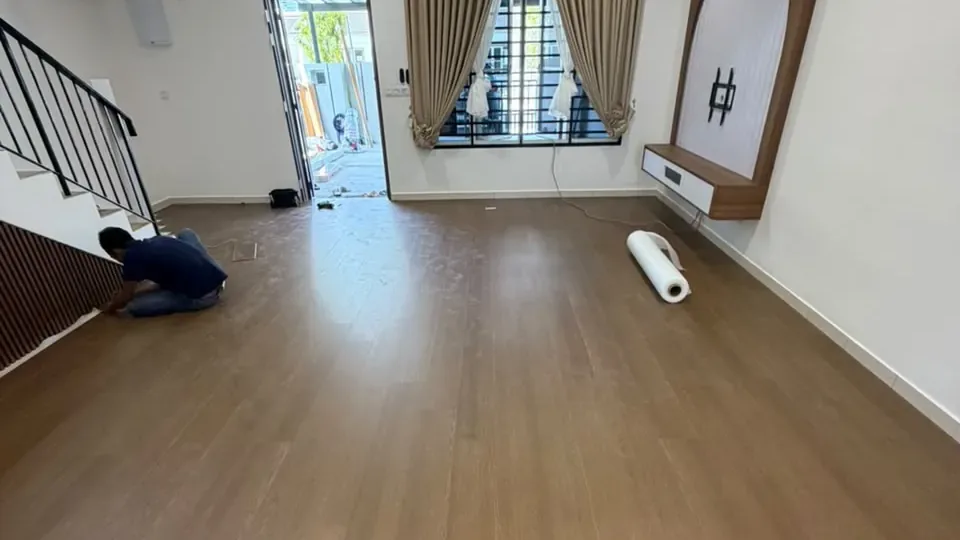
Yes, in many homes SPC flooring can be installed directly over existing tiles. If the tiles are firmly bonded, reasonably flat and dry, laying SPC on top is often the cleaner, quieter way to change a floor, because you skip most of the hacking, dust and debris removal.
The catch is that SPC is only as good as the floor underneath it. Hollow tiles, uneven joints, damp slabs and tight door clearances are what turn a simple over-tile job into a problem later. This guide walks through what to check first, which rooms suit it, and what to ask before you confirm a quotation, whether you are updating a terrace in Shah Alam, a condo in Petaling Jaya or a shop lot in Puchong.
Why SPC Can Often Go Straight Over Tiles
SPC (stone plastic composite) is a rigid-core plank that usually clicks together and floats over the existing floor rather than being glued or cemented down. Because the core is stiff, it can bridge shallow grout lines that a soft vinyl sheet would show through.
- Less hacking. Removing old tiles is noisy, dusty and adds debris disposal. Going over them avoids most of that.
- Shorter disruption. Without demolition and screeding, the job is mainly preparation and laying, which matters if you are living in the house or running a shop.
- Friendlier for condos. Many management offices restrict hacking hours and debris movement. An over-tile install is usually easier to fit within those rules, but always check with your management first.
- Warmer look and feel. You move from cold, glossy tiles to a wood-look or stone-look floor without rebuilding the slab.
Over-Tile SPC at a Glance
Use this as a first read of your floor. The site check is what confirms it.
| Existing tile condition | Over-tile SPC? | What usually happens |
|---|---|---|
| Firmly bonded, flat, shallow grout lines | Usually suitable | Clean, check flatness, lay with the underlay recommended for the product |
| A few hollow-sounding tiles | Fix first | Re-bond or replace the hollow patches before laying |
| Cracked, lifted or “tented” tiles | Fix first | Remove and patch the affected area; find out why they lifted |
| Lipping between tiles, dips or slopes | Possible after prep | Grinding high points or levelling low areas to the product’s flatness tolerance |
| Deep or wide grout lines, textured anti-slip tiles | Possible after prep | Skim or fill so the pattern does not telegraph through |
| Damp patches, recurring stains, ground-floor moisture | Investigate first | Find and solve the moisture source; SPC will not stop water from below |
| Bathrooms, showers, porches, outdoor areas | Not recommended | Keep tiles; consider outdoor decking or artificial grass for outside spaces |

What to Check Before Laying SPC Over Tiles
- Tap test for hollow tiles. Walk the room and tap tiles with a coin or handle. A dull, hollow sound means the tile is not fully bonded. Under a floating floor, loose tiles can crack, shift or click over time.
- Flatness across the room. Installers check with a long straightedge and compare it with the flatness tolerance in the manufacturer’s installation guide for that product. High joints get ground down; dips get levelled.
- Moisture and slab condition. Ground-floor slabs, rooms next to bathrooms and areas with past leaks deserve a closer look. SPC itself is water resistant, but trapped moisture underneath can still cause smells, mould or underlay damage.
- Height build-up and doors. SPC plus underlay adds height on top of the tiles. Check the main door, room doors, sliding doors, wardrobe doors and the gap under the fridge or dishwasher. Some doors may need trimming.
- Transitions and edges. Where the new floor meets tiles you are keeping (kitchen, bathroom entrance, balcony), trims or reducers will be needed. Ask where each one will sit.
- Fixed cabinets and built-ins. A floating floor needs room to move, so it generally should not be trapped under kitchen cabinets, island counters or heavy built-ins. Plan whether the floor runs up to them or under them before the carpenter comes in.
Which Rooms Suit SPC Over Tiles?
Usually a good fit
- Living and dining areas
- Bedrooms and study rooms
- Upper-floor corridors and family halls
- Dry retail areas and offices (check for heavy rolling loads)
Keep tiles here
- Bathrooms and shower areas
- Wet kitchens with frequent washing down
- Covered porches and car porches
- Balconies and areas exposed to rain
If you are still deciding between the two materials room by room, our guide on SPC vs tiles for your renovation goes deeper into wet areas, comfort and repairs.
Common Mistakes With Over-Tile Installs
- Skipping the hollow-tile check because the floor “looks fine”.
- Forgetting the main door and sliding door clearances until the planks are already down.
- Trapping the floor under new kitchen cabinets or heavy built-in wardrobes.
- Butting the planks tight against walls with no expansion gap, which can lead to lifting.
- Laying SPC in a bathroom because it is described as waterproof.
- Starting work in a condo before getting management approval for the renovation.

What Affects Your Quotation
We do not put a single price on over-tile jobs because every floor starts in a different condition. These are the factors that usually move the quotation:
- Total area and room layout (open plan versus many small rooms and corners)
- How much repair or levelling the existing tiles need
- Skirting removal and reinstatement, or new skirting
- Door trimming and the number of transitions or trims
- Staircases, if any, which are priced and installed differently
- The product itself: thickness, wear layer and whether underlay is attached
- Furniture moving, access, parking and condo working-hour rules
Comparing materials as well? See SPC vs vinyl flooring or browse our SPC flooring collection. If you would like a site visit or quotation, you can contact us anytime.
Questions to Ask Before You Confirm
| What to ask your installer | Why it matters |
|---|---|
| Will you check for hollow tiles and flatness before confirming? | Prep work is the main thing that changes the scope and the final cost. |
| What underlay do you recommend over tiles for this product? | The right underlay helps with sound, feel and minor unevenness, but cannot hide big defects. |
| How much height will the floor add, and which doors need trimming? | Avoids doors that scrape or will not close after installation. |
| Where will the trims and transitions go? | Tells you how the edges will look at kitchens, bathrooms and balconies. |
| How will you handle expansion gaps and skirting? | Gaps hidden under skirting help the floor move without lifting. |
| What is included in the warranty, and is it in writing? | Product and workmanship cover are often different; confirm both before paying a deposit. |
Frequently Asked Questions
Will the tile grout lines show through SPC?
With a rigid SPC plank and shallow, even grout lines, they usually do not. Deep, wide or uneven grout lines may need to be filled or skimmed first so they do not telegraph through over time.
Does SPC over tiles sound hollow when you walk on it?
A floating floor can sound slightly different from tiles. A suitable underlay and a flat, well-prepared base help a lot. Loud clicking or hollow spots usually point to unevenness or loose tiles underneath.
Can I lay SPC over tiles in the kitchen?
In a dry kitchen it is often possible, with care around the sink and appliances and a plan for cabinets. For wet kitchens that are washed down regularly, tiles are usually the safer choice.
Do I need to remove the skirting first?
Not always. Some installs keep the skirting and use a trim along the edge; others remove and reinstate it, or fit new skirting, to hide the expansion gap neatly. Ask which method is in your quotation.
Can I do this in a condo?
Usually yes, and it is often easier than hacking out tiles. Check your management’s renovation rules, working hours, deposit and any noise or lift booking requirements before scheduling.
Planning SPC over your existing tiles?
Send us a few details on WhatsApp and we can tell you what to check and what the job is likely to involve:
- Your area or location (for example Subang, Shah Alam, Klang)
- Property type and the rooms you want to cover
- Approximate size of each area, if you know it
- Photos of the current tiles, doorways and any cracked or hollow spots