
One of the reasons people choose SPC flooring is that it is easy to live with. You do not need to wax it, oil it or polish it. A simple routine of sweeping, damp mopping and a few good habits is usually enough to keep it looking tidy for years.
This guide covers how to clean SPC flooring day to day, what to avoid, how to handle common spills and marks, and the small habits that protect the floor in Klang Valley homes and shops.
Not sure how to care for the SPC floor you have?
Send us a photo of the floor and any mark or stain that is bothering you. We’ll help you work out a safe way to clean it.
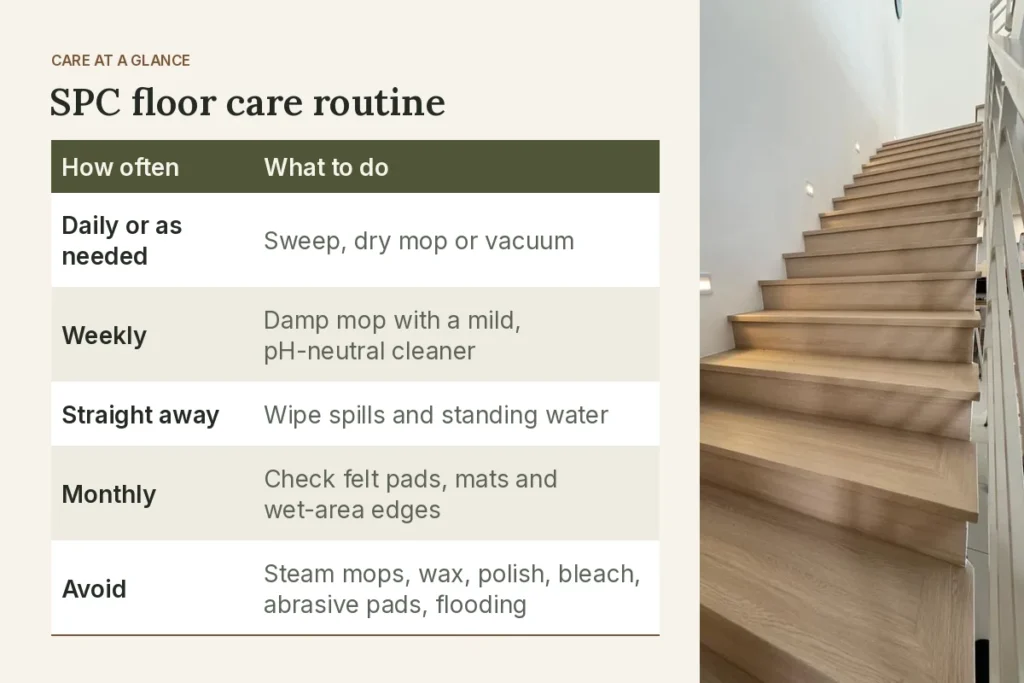
SPC Floor Care at a Glance
| How often | What to do | Notes |
|---|---|---|
| Daily or as needed | Sweep, dry mop or vacuum | Grit and sand act like sandpaper underfoot, especially near doors |
| Weekly | Damp mop with a mild, pH-neutral cleaner | Wring the mop well; the floor should dry within a few minutes |
| Straight away | Wipe spills and standing water | Do not leave water pooling at joints or edges |
| Monthly | Check felt pads, mats and wet-area edges | Replace worn pads; look for water marks near bathroom and kitchen doors |
| Avoid | Steam mops, wax, polish, bleach, abrasive pads, flooding the floor | These can dull the surface or push moisture into joints |
Daily and Weekly Cleaning Routine
Day to day: The most useful thing you can do is keep grit off the floor. Sand, small stones and dust carried in on shoes are what slowly scratch and dull the wear layer.
- Sweep with a soft broom or use a dry microfibre mop.
- If you vacuum, use the hard-floor setting and switch off any hard beater bar.
- Pay extra attention to entrances, the area in front of the kitchen and anywhere near a balcony or garden door.
Once a week (or more in busy homes):
- Use a damp mop, not a wet one. Wring it until it is only slightly damp.
- Use plain water or a mild, pH-neutral floor cleaner, diluted exactly as the label says.
- Mop in the direction of the planks so streaks are less visible.
- If the floor still looks streaky, go over it once more with a clean, barely damp microfibre pad.

What Not to Use on SPC Flooring
Most SPC care problems come from using the wrong product or too much water, not from the floor itself. Unless your floor’s care guide says otherwise, avoid:
- Steam mops. High heat and steam can be forced into the click-lock joints and may affect the surface or the locking edges. Many SPC care guides advise against them.
- Wax, polish or “shine” products. SPC does not need them, and they can leave a slippery or patchy layer that is hard to remove.
- Bleach, strong solvents or harsh degreasers. These can dull or discolour the surface over time.
- Abrasive pads, scouring powders or steel wool. They scratch the wear layer.
- Soaking or flooding the floor. SPC is water-resistant on the surface, but water left standing at joints and edges is still best avoided. Our guide to whether SPC flooring is waterproof explains the difference between spills and flooding.
If you are not sure about a cleaner, test it first on a small hidden area, such as inside a wardrobe or under a sofa.
Handling Spills, Stains and Marks
Act quickly and stay gentle. For most everyday marks:
- Water, drinks and food: Blot or wipe up straight away with a soft cloth, then dry the area.
- Oily or sticky marks: A little mild cleaner on a soft damp cloth, then wipe with plain water and dry.
- Scuff marks from shoes or furniture: Often lift with a soft cloth or a soft rubber eraser, rubbed gently.
- Pet accidents: Clean up quickly, wipe with a mild cleaner and dry well. Our guide to SPC flooring for homes with pets has more on everyday pet care.
- Paint, glue or marker: Do not scrape with metal tools. Ask your installer or check the care guide before using any solvent.
If a mark does not come off with gentle cleaning, stop and send a photo before trying anything stronger. It is easier to deal with a stain than with a damaged surface.
Stuck with a mark that will not come off?
WhatsApp us a close-up photo of the mark and a wider photo of the room. We’ll suggest what to try, or whether it is better to leave it for an installer.
Protecting Your Floor from Scratches, Dents and Sun
A few small habits make a big difference over the life of the floor:
- Felt pads under furniture. Put them under chair and table legs, sofas and cabinets, and replace them when they wear thin or collect grit.
- Lift, do not drag. When moving heavy furniture, lift it or slide it on a cloth or board.
- Doormats at entrances. A mat outside and inside main doors catches a lot of sand. Some rubber or latex-backed mats can discolour vinyl-type floors, so choose mats labelled safe for vinyl or hard floors.
- Chair mats for office chairs. Hard castors on rolling chairs can wear one spot quickly in a home office or shop.
- Shade from strong sun. Large west-facing windows and glass doors in landed homes can fade or warm the floor. Blinds or curtains during the hottest hours help.
- Keep wet areas dry. Wipe water near bathroom, kitchen and balcony doorways, and fix leaking taps or AC drains early.
Families with young children or elderly parents may also want to keep the floor free of slippery cleaning residue. See choosing SPC flooring for a home with children and elderly parents for grip and safety tips.
Care Tips for Condos, Landed Homes and Shops
- Condos: Balcony doors and the area in front of the kitchen collect the most grit. A small mat at the balcony door helps. More in our SPC flooring for condos guide.
- Landed homes: Porch and garden doors bring in sand and dust, and sun-facing rooms need shade. See our room-by-room guide for landed homes.
- Shops and offices: Higher foot traffic means sweeping more often, mats at the entrance and protection under rolling racks or chairs. Our SPC flooring for shops guide covers commercial use.
When Cleaning Is Not the Answer
Some problems are not about dirt. Call an installer if you notice:
- Planks lifting, peaking or cupping
- Joints opening up or catching dirt
- Hollow, clicking or squeaking sounds when you walk
- Water marks or a damp smell near the floor edges
- Deep scratches or a damaged plank
Our guide on why SPC flooring lifts, separates or makes noise explains the common causes. Care instructions can also be part of a product’s warranty terms, so keep the care guide with your paperwork. Our SPC flooring warranty questions guide lists what to ask and keep. To see the options we install, visit our SPC flooring page, or contact us to arrange a site visit.
FAQ
What is the best way to clean SPC flooring?
Sweep or vacuum on a hard-floor setting to remove grit, then damp mop with a well-wrung mop and plain water or a mild, pH-neutral cleaner. Dry any standing water. Always check the care guide that came with your floor.
Can I use a steam mop on SPC flooring?
It is best to avoid steam mops. The heat and moisture can be forced into the joints, and many SPC care guides advise against them. A damp microfibre mop is a safer choice.
Can I use floor polish or wax on SPC?
No. SPC does not need wax or polish, and these products can leave a slippery or patchy film. Regular damp mopping is enough to keep the surface looking clean.
How do I remove scratches from SPC flooring?
Light scuffs can sometimes be lifted with a soft cloth or soft eraser. Deeper scratches through the surface usually cannot be polished out, and a badly damaged plank may need replacing. Send a photo to an installer before trying any repair product.
How often should I mop SPC flooring?
Most homes do well with sweeping as needed and damp mopping about once a week. Busier homes, homes with pets and shops may need it more often. The key is to keep grit off the floor and not to over-wet it.
Planning a New SPC Floor or Need Care Advice?
Send us these on WhatsApp and we’ll reply with the next steps:
- Your area (e.g. PJ, Subang, Shah Alam, Klang)
- Condo, landed home or shop
- Rooms and approx sqft
- Current floor (SPC, tiles, cement, other)
- What you need help with (cleaning, a stain, a scratch or a new install)
- 2–3 photos of the floor
What happens after you WhatsApp us
Reply → review photos → measure if needed → advise
- We reply with follow-up questions about your floor.
- For care questions, we suggest safe next steps based on your photos.
- For a new install, we arrange free site measurement in the Klang Valley.
- We quote supply and installation with clear prep and care notes.
Supply and install, with free site measurement across the Klang Valley. Send photos first if you are not sure what your floor needs.