
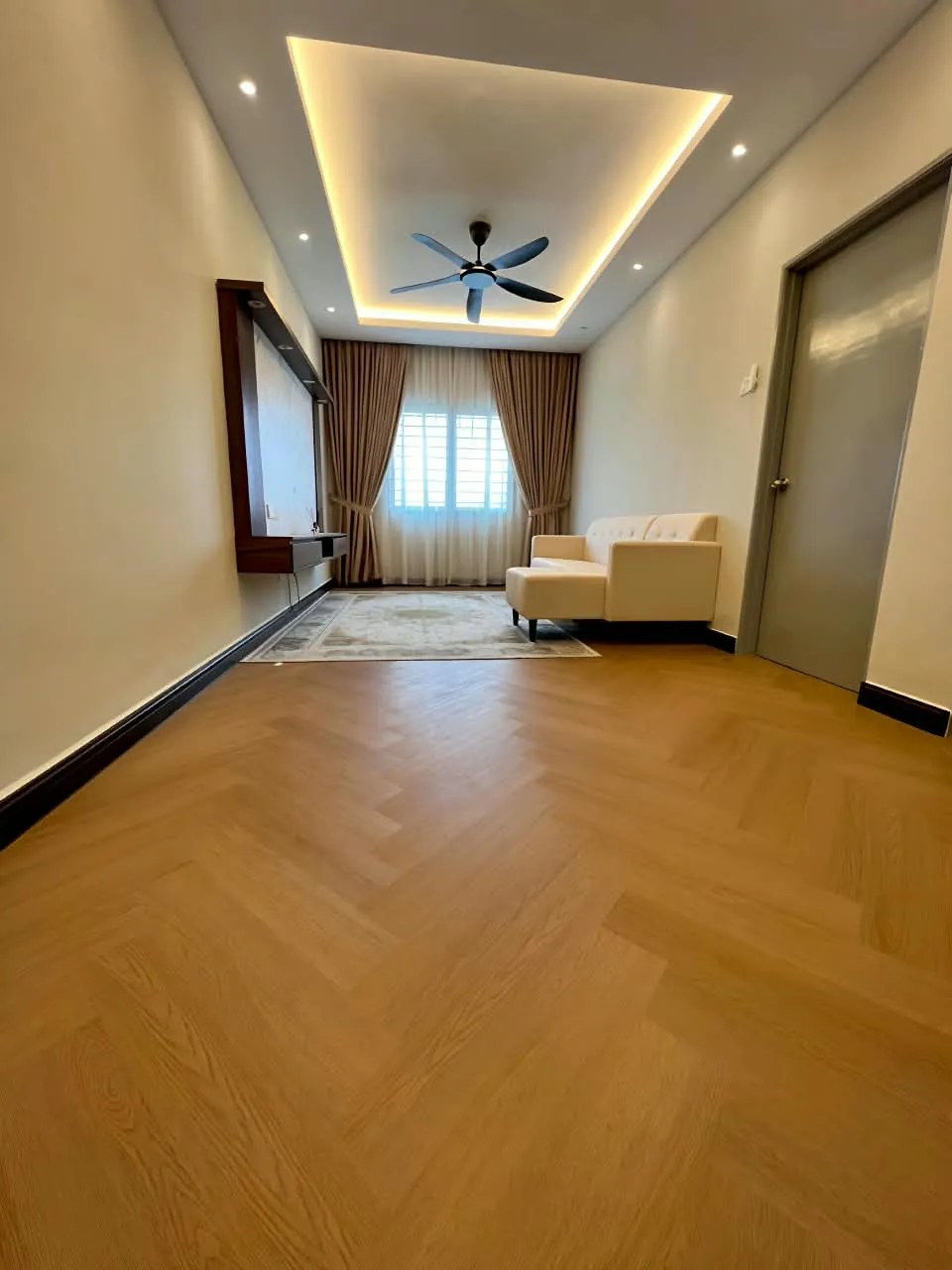
When you compare SPC flooring samples, two planks can look almost identical: same colour, same wood grain, same thickness on the box. Then you see a small line on the spec sheet, “wear layer 0.3mm” on one and “0.5mm” on the other, and wonder whether it matters.
It can, but not in a way a single number settles. This guide explains what the wear layer is, what those example labels are meant to describe, and the questions that help you choose a product that suits your rooms. We won’t tell you which figure is “best”, because that depends on the product, how the floor will be used and what the manufacturer actually states.
What is the wear layer on SPC flooring?
SPC (stone plastic composite) flooring is built up in layers. The exact construction varies from product to product, but a typical description goes something like this, from the top down:
- Surface coating. Many products list a coating on top, sometimes described as a UV coating.
- Wear layer. A clear protective layer that sits over the design.
- Printed design film. The layer that gives the plank its wood or stone look.
- Core. The rigid SPC board that makes up most of the plank.
- Underlay or backing. Some products have one attached; others don’t.
The wear layer is the transparent layer that protects the printed design underneath. It’s usually the part that takes everyday foot traffic, chair legs and grit from shoes. If it wears through in a spot, the printed pattern underneath can be exposed, so it’s worth understanding before you commit.
Ask for the specification sheet for the exact plank you’re considering and check how the manufacturer describes each layer. Don’t assume two products with similar names are built the same way.
Wear layer is not the same as total thickness
This is the most common mix-up. The total thickness of an SPC plank and the wear layer are separate figures on the spec sheet. The wear layer is only a small part of the total.
A thicker plank doesn’t automatically have a thicker wear layer, and a thinner plank doesn’t automatically have a thinner one. Check both figures separately, and ask whether the total thickness listed includes any attached underlay. If you’re also weighing up overall plank thickness, our guide to 4mm, 5mm or 6mm SPC flooring covers what to compare there.
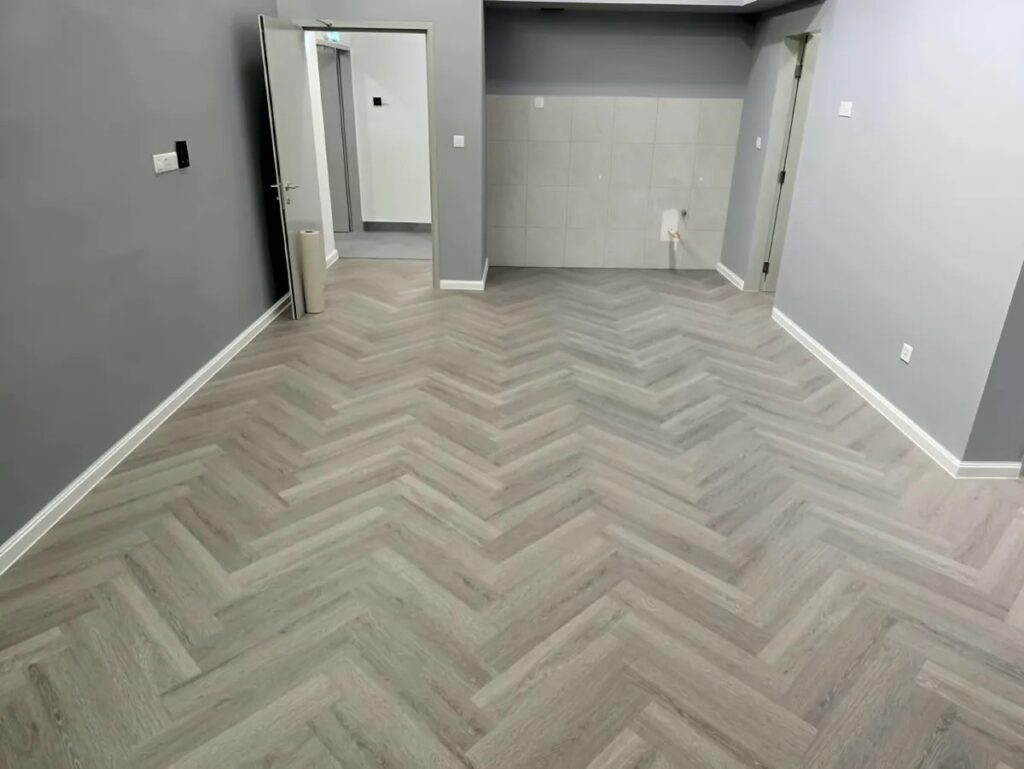
What do 0.3mm and 0.5mm labels usually mean?
If a specification sheet lists a wear layer of 0.3mm or 0.5mm, treat that figure as a starting point for questions. Ask your installer to explain what the stated measurement means for that exact product.
As a general idea, a thicker wear layer is often presented as giving more protection to the printed design over time, and products with a thicker wear layer are sometimes suggested for busier areas. But how a floor actually holds up depends on more than one figure, including:
- The surface coating and how it’s described.
- How the wear layer is made, which can differ between manufacturers.
- How the floor is used: foot traffic, pets, rolling chairs, furniture, and grit carried in from outside.
- How it’s looked after: mats at entrances, furniture pads and suitable cleaning.
- Installation and subfloor: a floor that’s properly prepared and installed to the product’s instructions.
So rather than “Is 0.5mm better than 0.3mm?”, it’s more useful to ask: “For this product, in these rooms, with the way we live, what does the manufacturer recommend, and what does the spec sheet actually say?”
A note on units
Some specification sheets give the wear layer in millimetres and others in mils, a different unit. If two products are quoted in different units, ask your supplier to convert them to the same unit so you’re comparing like with like.
Questions to ask about the wear layer
Before you choose, these questions help turn a label into something you can compare:
- What is the stated wear layer for this exact product? Ask to see it on the specification sheet, not just on a sample board or a chat message.
- Is there a surface coating as well? Ask what it’s called, what it’s for, and whether the manufacturer gives any cleaning or care guidance for it.
- What use is the product intended for? Some manufacturers state whether a product is intended for residential or light commercial use. Ask what the documents say.
- Does the manufacturer quote any test results or ratings? If so, ask which test or standard they refer to, and ask for it in writing rather than relying on a verbal summary.
- Is the warranty linked to the wear layer? If there’s a warranty, ask what it covers, whether wear is included, what conditions apply and who provides it. Our guide to SPC flooring warranty questions has a fuller list.
- Are two quotes for the same product? If one quote lists a different wear layer from another, ask why, and whether it’s the same product or an alternative.
Matching the wear layer to how you'll use each room
Instead of choosing a figure in the abstract, think about each space and how it’s used. These are things to consider and discuss with your installer, not rules.
Busy areas
Entrance halls, living rooms and corridors usually see the most footsteps. Ask whether the product you’re considering is suggested for areas of heavier use, and plan practical protection such as mats at entrances.
Bedrooms and quieter rooms
Rooms with lighter use may not have the same demands as a busy living area. If you want one product throughout for a seamless look, ask whether it suits every room on your list.
Homes with pets or children
Claws, toys and dragged furniture can be harder on any surface. Ask what the manufacturer says about scratch resistance, and read our guide on whether SPC flooring suits homes with pets.
Stairs
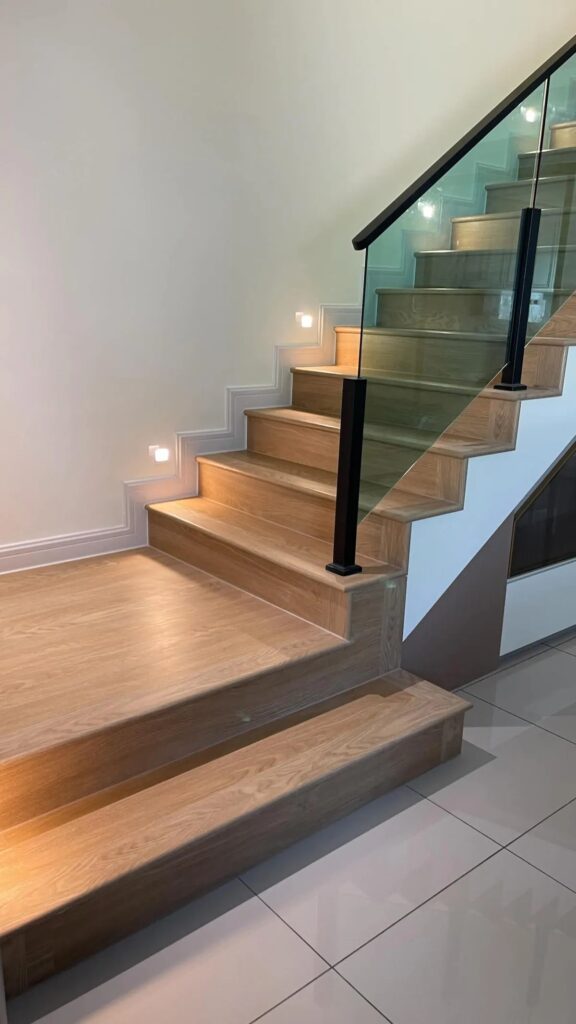
Stair treads and nosings take concentrated wear at the front edge. If stairs are part of the job, ask what product and nosing are proposed, and whether the wear layer is the same as on the main floor.
Property type and access
Your home type affects what you need to plan, whatever wear layer you choose:
- Condos and apartments. Ask your management office about renovation applications, permitted working hours, lift booking and protection, and disposal of offcuts.
- Landed homes. Think about rooms that open to the porch or garden, where grit can be walked in, and plan mats or a transition there.
- Rental units and home offices. If tenants, guests or rolling chairs are involved, mention it when asking for product advice, and ask about chair mats or suitable castors.
Looking after the wear layer
Whatever the figure on the spec sheet, care makes a difference. Ask your supplier for the manufacturer’s cleaning and maintenance guidance for your product, and follow it. A few practical habits to ask about:
- Mats at entrances to catch grit.
- Felt pads under chair and table legs.
- Lifting heavy furniture rather than dragging it.
- Cleaning products and methods that suit the surface coating.
Our guide on how to clean and maintain SPC flooring goes through day-to-day care in more detail.
How to compare wear layers across quotes
When quotations arrive, check that each one names the exact product, with a code or name, and includes or links to the spec sheet. Compare:
- Total thickness and wear layer, as separate lines.
- Surface coating, if stated.
- Intended use, if stated.
- Underlay, whether attached or separate.
- Any warranty, in writing, with what it covers.
If one quote looks much cheaper, check whether the wear layer, coating or construction is different before comparing prices. Our checklist on comparing SPC flooring quotes covers the rest of the quotation.
Working with Lantai Living
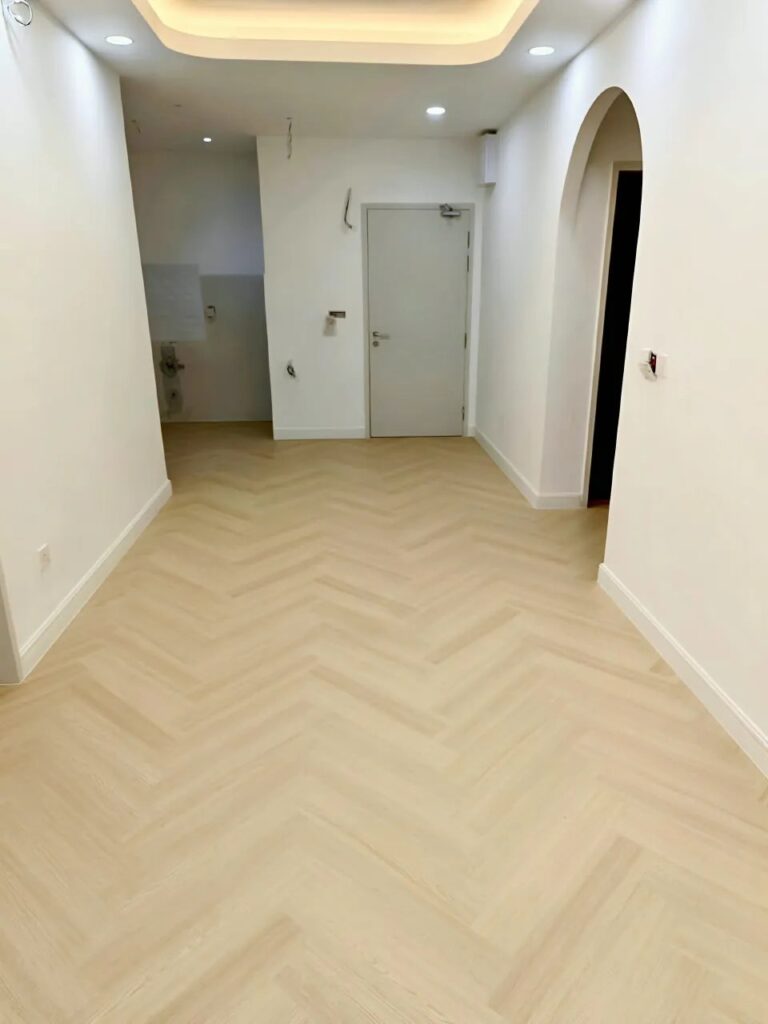
Lantai Living is based in Petaling Jaya, Selangor. We supply and install SPC and vinyl flooring for homeowners, renovation contractors and interior designers. Our service areas are Petaling Jaya, Shah Alam, Bukit Jelutong, Subang Jaya, Bandar Sunway, Puchong, Sri Petaling, OUG, Klang and the wider Klang Valley.
Every Lantai Living job includes installation, so our quotations are for supply and install. Product details, including specifications such as wear layer, and pricing are available on request.
Frequently asked questions
What is the wear layer on SPC flooring?
It’s the clear protective layer that sits over the printed design on an SPC plank. Its job is to help protect the design from everyday wear. Construction varies between products, so check how the manufacturer describes it on the specification sheet.
Is a 0.5mm wear layer better than 0.3mm?
Not automatically. A thicker wear layer is often presented as offering more protection to the printed design, but how a floor holds up also depends on the surface coating, the product’s construction, how the room is used and how the floor is cared for. Ask what the manufacturer recommends for your rooms.
Is the wear layer the same as the plank thickness?
No. Total thickness (such as 4mm, 5mm or 6mm) and wear layer are separate figures. Check both on the specification sheet, and ask whether the total thickness includes any attached underlay.
What should I ask a supplier about the wear layer?
Ask for the stated wear layer on the specification sheet, whether there’s a surface coating, what use the product is intended for, whether any test results or ratings are quoted, and whether any warranty covers wear.
How do I ask Lantai Living about wear layer options?
WhatsApp us at +60 12-923 6383 with the rooms you’re planning, how they’re used, your room sizes or floor plan and a few photos of your current floor.
Let's talk about your space
Not sure which product suits your rooms? Tell us how each space is used and send a few photos, and we’ll talk through the options and prepare a quotation.
Good living starts from the floor.