
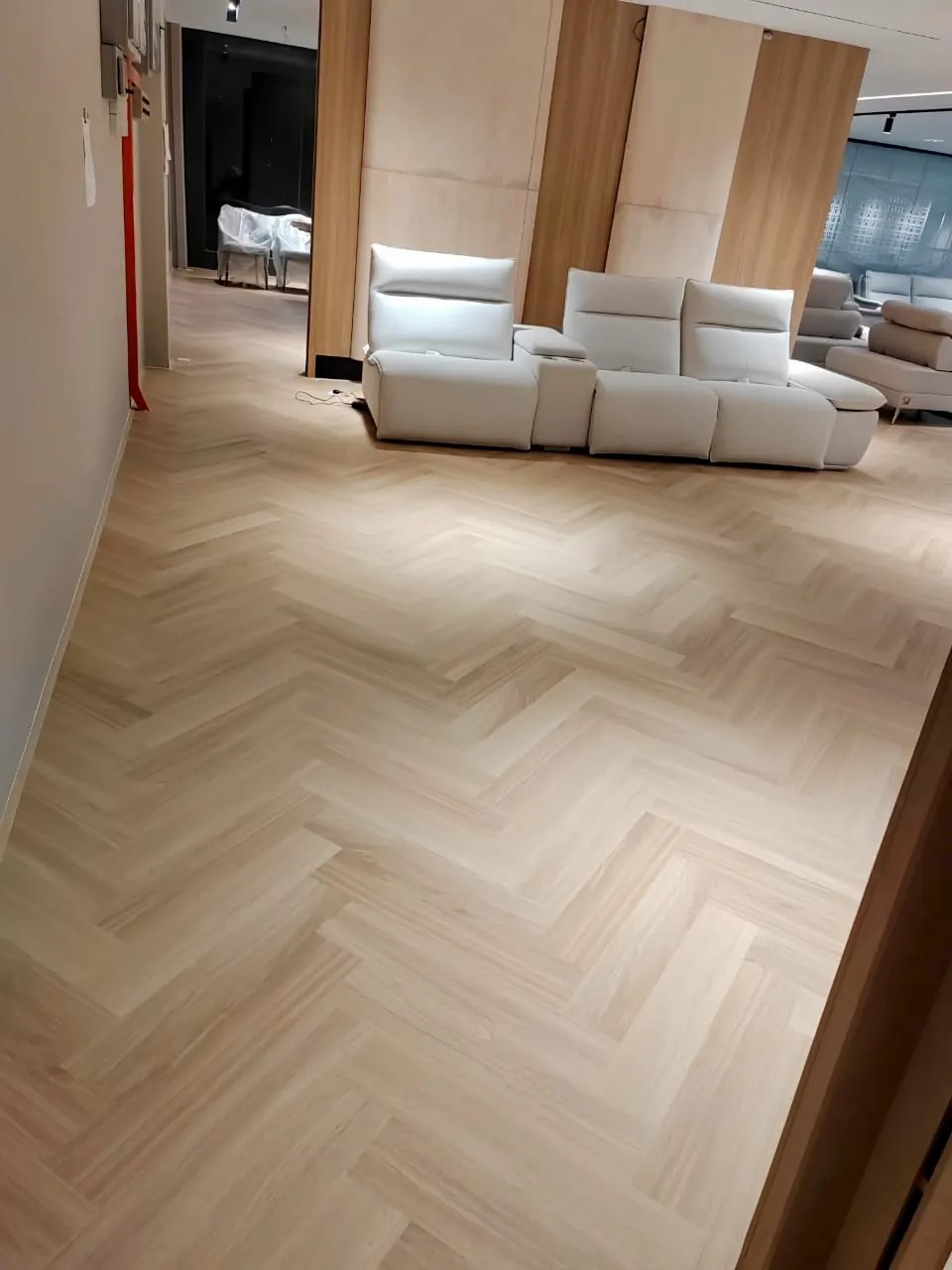
Glue-down vinyl is worth discussing when you want flooring bonded to a suitable base and are prepared for the preparation that system needs. Whether it is better than a floating floor depends on the product and subfloor, your room layout and how you plan to use the space. Adhesive alone is not a reason to expect a better result.
This guide focuses on the installation decision: what to ask before choosing a bonded floor, when to keep a floating option on your shortlist, and which details belong in your quotation. For the broader material comparison, start with SPC vs vinyl flooring: which suits your home better?
What does glue-down vinyl mean?
Glue-down describes an installation method in which suitable vinyl flooring is bonded to a prepared base using the specified adhesive. A floating floor is laid as a connected system without bonding it across the subfloor. Follow the instructions for the exact product; the word vinyl on a quotation does not explain how it should be fitted.
Ask the installer to identify the proposed flooring, installation method and compatible preparation materials together. Do not assume a plank intended for one method can be installed using another, or that adding glue to a floating product is an acceptable improvement.
Treat the floor, adhesive and base as one system. If any part is unsuitable, choosing a more expensive finish will not resolve that mismatch.
When is glue-down vinyl worth considering?
You need a carefully planned doorway finish
If a main door, bedroom door or adjoining tiled area leaves little room for a change in floor height, ask the installer to compare complete installed build-ups. Include preparation layers, adhesive and any finishing profiles, rather than comparing the flooring samples alone.
A glue-down option may be worth investigating if its specified build-up suits that junction. It is not a promise that doors will clear or thresholds will disappear. Ask for the proposed finished height before deciding.
You want to assess a bonded floor for particular furniture
Tell the installer about wheeled chairs, movable furniture or equipment that will travel across the room. Ask whether the proposed vinyl and adhesive system are approved for those uses, and what protection is required.
Bonding is not a substitute for checking load suitability. A home study with a rolling chair needs a discussion about the exact flooring, castors and protective measures; it should not be approved simply because the floor will be glued down.
You want to understand future plank repairs
Ask how a damaged piece would be removed, how adhesive would be dealt with and how the replacement would be fitted. Depending on the product and installation, a local repair may be an option worth comparing with the repair procedure for a floating floor.
Do not assume replacement will be invisible or straightforward. Ask about keeping suitable spare material and what happens if matching material cannot be obtained later. Availability and the final appearance should never be taken for granted.
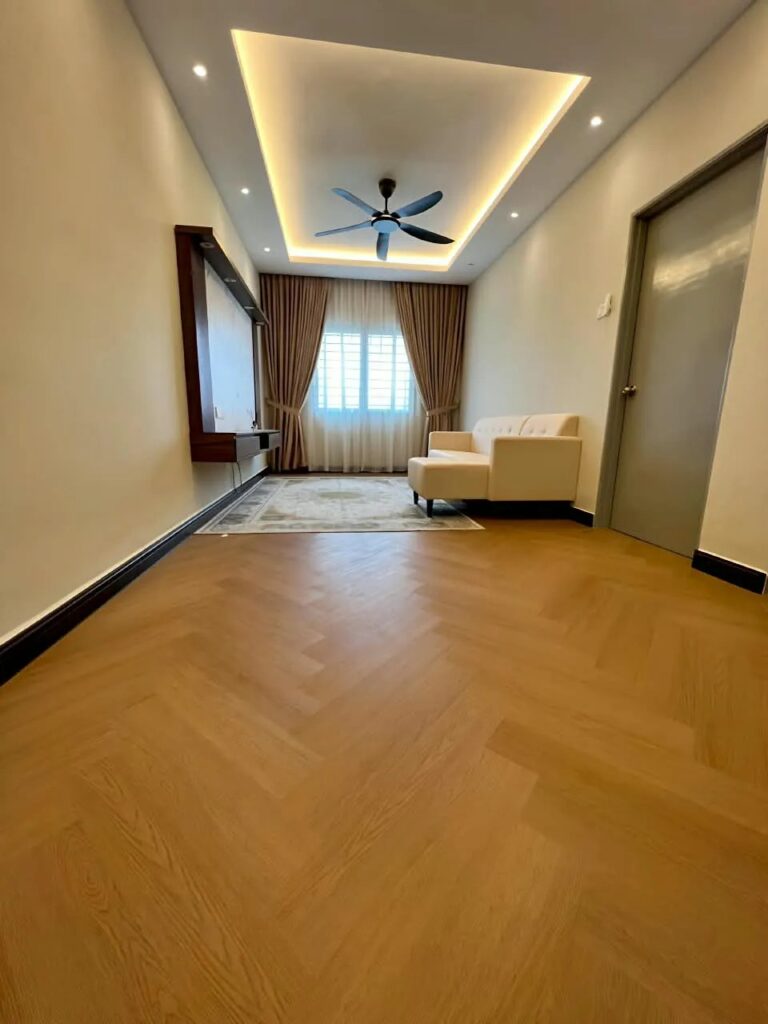
The subfloor decides whether the idea is practical
Before settling on glue-down vinyl, ask for a site assessment of the existing surface. A useful answer explains what must happen before fitting, rather than simply saying that the new flooring can cover the old one.
Smoothness and soundness
Ask how the installer will assess grout lines, patches, cracks, loose areas and surface contamination. Find out whether removal, cleaning, patching or smoothing is required for the selected system. Have the preparation described in writing, with the affected areas identified.
Glue should not be treated as a way to fill dips or secure a failing base. If someone proposes laying directly over an existing finish, ask which product instructions support that approach and what preparation those instructions require.
Moisture and compatibility
Ask how moisture suitability will be checked and which limits apply to the proposed flooring, adhesive and base. A floor that looks dry is not enough information for you to approve the system yourself. Any reported damp or previous leak should be raised before materials are selected.
If new preparation layers are needed, ask how their readiness will be assessed before installation continues. Avoid accepting a fixed waiting period without reference to the actual materials and site conditions.
When should a floating floor stay on your shortlist?
Keep a floating option in the discussion if you are concerned about future removal or if bonding would require preparation you do not want to undertake. Ask the installer to explain the removal process for each proposed system and what condition the underlying surface might be left in.
A floating floor still needs a suitable base. It should not be presented as a cure for unevenness or moisture, and its movement allowances, joints and restrictions must follow the product instructions.
If you are renovating a rented property, confirm what alterations the owner permits and what reinstatement is expected. Compare those requirements before choosing either method. Neither the label floating nor glue-down guarantees a reversible installation.
Check noise, sunlight and room boundaries separately
Installation method alone does not answer every comfort or suitability question. If sound matters, request evidence for the complete proposed floor assembly and check it against any building requirements. Do not assume glue-down will be quieter, or add an underlay unless the system specifically permits it.
Point out direct sunlight, areas beside external doors and any places where spills are likely. Ask whether the product and adhesive suit those conditions, and what shading, cleaning or protection the instructions require.
Also ask how the layout handles room boundaries, fixed cabinets and changes to other finishes. A bonded floor is not automatic permission to omit every joint or continue the same material throughout the home.
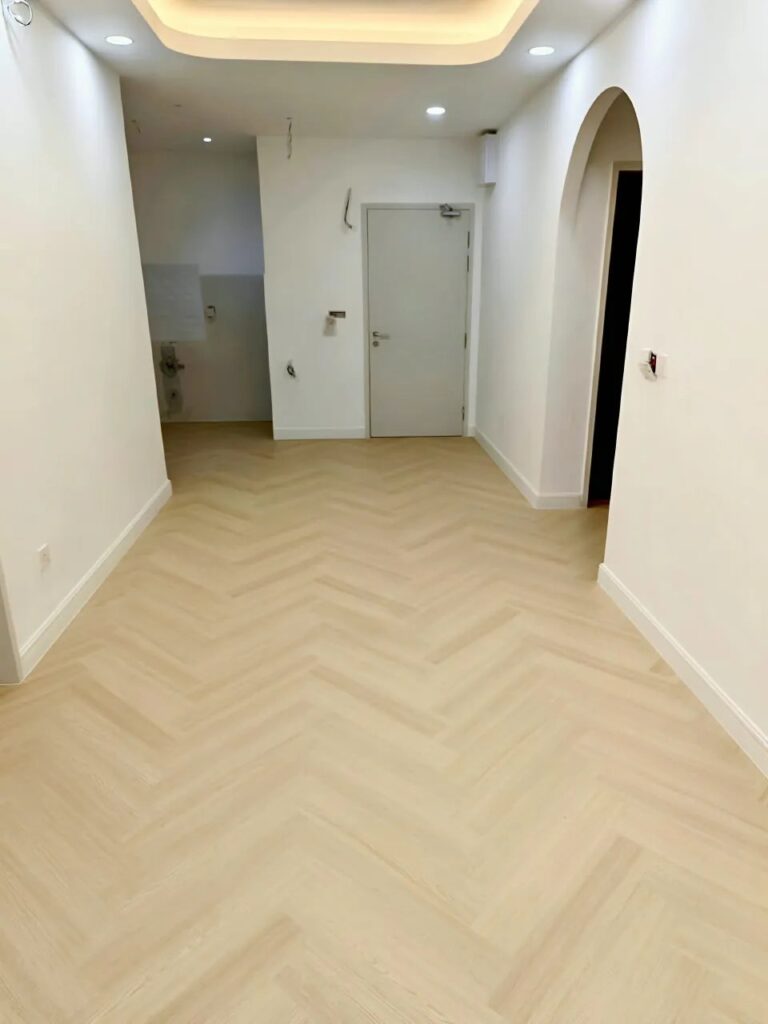
Plan the work around your Klang Valley property
For a condo in Petaling Jaya, Subang Jaya or Bandar Sunway, ask your management office what approval, acoustic information and lift arrangements are needed. Check access for preparation materials, parking for the installation team and the route for removing waste. These are questions for your building, rather than assumptions about the area.
Our guide to choosing SPC flooring for a condo offers further planning questions if a floating SPC option remains on your shortlist.
For a landed home in Shah Alam, Puchong or Klang, check where furniture can be stored and how people will reach rooms during the work. Ask whether preparation and installation can be phased, and whether that changes the programme.
With a bonded system, get clear instructions on when people can walk on the floor, furniture can return and cleaning can begin. Those timings depend on the materials and conditions; do not arrange your move around an assumed same-day handover.
Compare the complete job before choosing
Ask for quotations covering the same rooms and scope. Each should explain the proposed product and method, preparation, adhesive or other system components, edge finishes, thresholds, removal and disposal. Clarify furniture moving and door adjustments too.
For a useful starting checklist, see what should be included when comparing SPC flooring quotes. For glue-down vinyl, additionally request the adhesive specification and the conditions for returning the room to use.
The better option is the one whose requirements fit your base, intended use and renovation plan. Ask the installer to explain the trade-off using your actual rooms before choosing from samples.
Working with Lantai
We supply and install SPC and vinyl flooring for homeowners, renovation contractors and interior designers.
Lantai Living is based in Petaling Jaya, Selangor. Our service areas are Petaling Jaya, Shah Alam, Bukit Jelutong, Subang Jaya, Bandar Sunway, Puchong, Sri Petaling, OUG, Klang and the wider Klang Valley. Every Lantai Living job includes installation.
Send your floor plan and current-floor photos, and ask which product and installation method can be proposed for your space. Product details, specifications and pricing are available on request.
Frequently asked questions
Is glue-down vinyl always better than a floating floor?
No. Suitability depends on the product and subfloor, room use and renovation plans. Ask your installer to compare the complete systems, including preparation, finished heights and future removal.
Can glue-down vinyl go straight over existing tiles?
Do not assume it can. Ask your installer to assess tile condition, grout lines, moisture suitability and compatibility with the specified adhesive system. Get the required preparation confirmed before approving an overlay.
Can I use my room immediately after installation?
Ask for the instructions for the proposed flooring and adhesive. Walking, returning furniture and cleaning may have different waiting requirements, depending on the materials and site conditions. Agree on these before arranging your move.
Do project photographs show whether a floor is glued down?
A finished-floor photograph alone does not establish its fixing method. The photographs here are real Lantai Living projects, used to illustrate visible room layouts and flooring finishes rather than a particular installation system.
Let's talk about your space
Choosing the fixing method is easier with the actual floor in view. Send your room sizes, floor photos, property type and preferred timing, and tell us whether glue-down vinyl or a floating floor is on your shortlist.
Good living starts from the floor.