

Boutique yoga, Pilates, barre and dance studios are popping up in shoplots and offices around the Klang Valley. The floor is central to how a class feels: grip, comfort, sound and how easy it is to clean between sessions.
This guide covers what studio owners should check before choosing a floor: comfort for barefoot work, the right amount of grip, cleaning between classes, sound, and how mirrors and lighting change the look. For the vinyl vs rubber comparison in gyms, see our gym flooring guide.
Opening a studio?
Send us the space size, type of classes and photos. We’ll suggest floor zones.
Comfort Underfoot for Barefoot Classes
Yoga, Pilates and barre students spend most of the class barefoot or in grip socks, often kneeling, lying or sitting on the floor between poses. The floor should feel smooth and warm rather than cold and hard, with no raised joints, gritty texture or sharp edges at trims.
Comfort comes mainly from the product construction and the underlay. A flexible vinyl laid on a well-prepared base feels close to the slab and very even. A rigid-core plank with a suitable underlay feels slightly softer and can hide minor unevenness in an older shoplot floor. Ask to stand on samples barefoot before deciding, ideally on a base similar to your unit.
Grip and Friction: Mats, Socks and Turns
Studios need a balance. Yoga mats should stay put, Pilates clients should not slip when stepping off a reformer, and dancers need to turn and slide without their feet catching. A smooth vinyl surface with a fine texture suits most mat-based classes, because the mat provides the grip.
For dance and barre, ask about the surface finish and how it behaves with socks or soft shoes. Avoid heavily embossed textures that catch on turns, and avoid glossy finishes that become slippery when there is sweat or humidity. Agree a cleaning product that does not leave a slick film, because residue changes grip more than most owners expect. Our vinyl flooring range includes finishes suitable for studios.
Zoning the Studio
If part of the studio has weights or heavy equipment, rubber can be useful as a zone rather than the whole floor. Our vinyl vs rubber gym flooring guide compares the two materials in detail; for a studio, the main question is simply where heavier loads will sit.
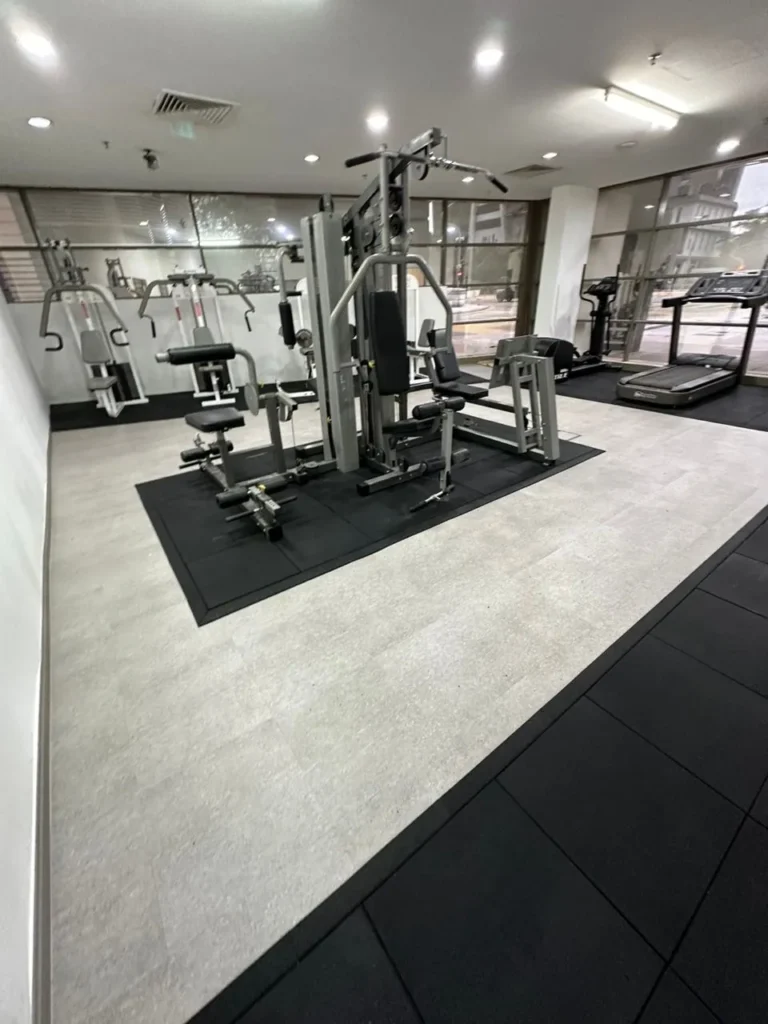
Mixed studios often use vinyl for the main class floor and rubber under weights, reformers or functional training areas. The photos here are from one of our gym projects, with light grey stone-look vinyl and black rubber mat zones, a similar zoning approach.
Mirrors, Light and Colour
Mirror walls double the floor visually. Light grey or wood-look vinyl keeps the room bright and calm. Dark floors show dust and footprints more easily. Light colours suit yoga and Pilates; warmer wood tones suit barre and dance studios. A matt or low-sheen finish also reduces glare from downlights and morning sun, which matters when students are lying on their backs looking up.
Cleaning Between Classes
Studios clean floors several times a day. Choose a floor and cleaner that work together, avoid harsh chemicals unless the maker allows them, and dry the floor before the next class. Our SPC cleaning guide has general tips that also apply to vinyl.
Want advice for your own space?
WhatsApp us a few photos and the approximate size. We will reply with suitable options and next steps.
Sound Between Classes and Neighbours
Studios in shoplots and office towers often share walls and floors with other tenants. Footsteps, dropped props and music carry through hard floors. Ask about acoustic underlay where the product allows it, check the building’s rules on noise, and plan louder classes away from shared walls where possible. Inside the studio, a quieter floor also makes it easier for instructors to talk without raising their voice.
Timing the Fit-Out Around Your Opening
Most studio fit-outs have a fixed opening date and a class timetable already published. Book the flooring after ceiling, lighting, mirrors and painting are done, and protect the floor while the reception counter and storage are built. Leave a day for the final clean and a trial class before opening, so you can check grip, sound and glare in real use.
Installing in a Shoplot or Office
Many studios move into units with old tiles, carpet or marble. Vinyl can often go over a sound, flat base. Check building rules on noise and work hours. Our office flooring guide covers similar fit-outs. To see the options we install, visit our vinyl flooring page, or contact us to arrange a site visit.
Studio Flooring Checklist
- Class types and equipment listed
- Floor samples tested barefoot and with grip socks
- Vinyl and rubber zones marked
- Colour chosen with mirrors and lighting
- Cleaning routine agreed
- Base checked
- Building rules checked
FAQ
What is the best floor for a yoga studio?
Many studios choose vinyl for a smooth, easy-clean surface that suits yoga mats.
Is rubber needed in a Pilates studio?
It can help under heavy equipment, but many Pilates studios use vinyl throughout.
Is vinyl good for dance?
For light classes, it can work. High-impact dance often needs a specialised sprung floor.
Can vinyl go over existing tiles in a studio?
Often, if the tiles are sound and flat.
Plan Your Studio Floor
Send us these on WhatsApp and we’ll reply with the next steps:
- Your area
- Type of studio and classes
- Approx sqft
- Current floor
- Equipment list
- Photos
What happens after you WhatsApp us
Reply → site visit → recommendation → quote
- We reply with a few questions about your space.
- We arrange a site visit in the Klang Valley to check the base and measure.
- We suggest suitable options and explain the trade-offs.
- We send a written quote listing preparation, installation and trims.
Studio, gym and commercial flooring across the Klang Valley.