
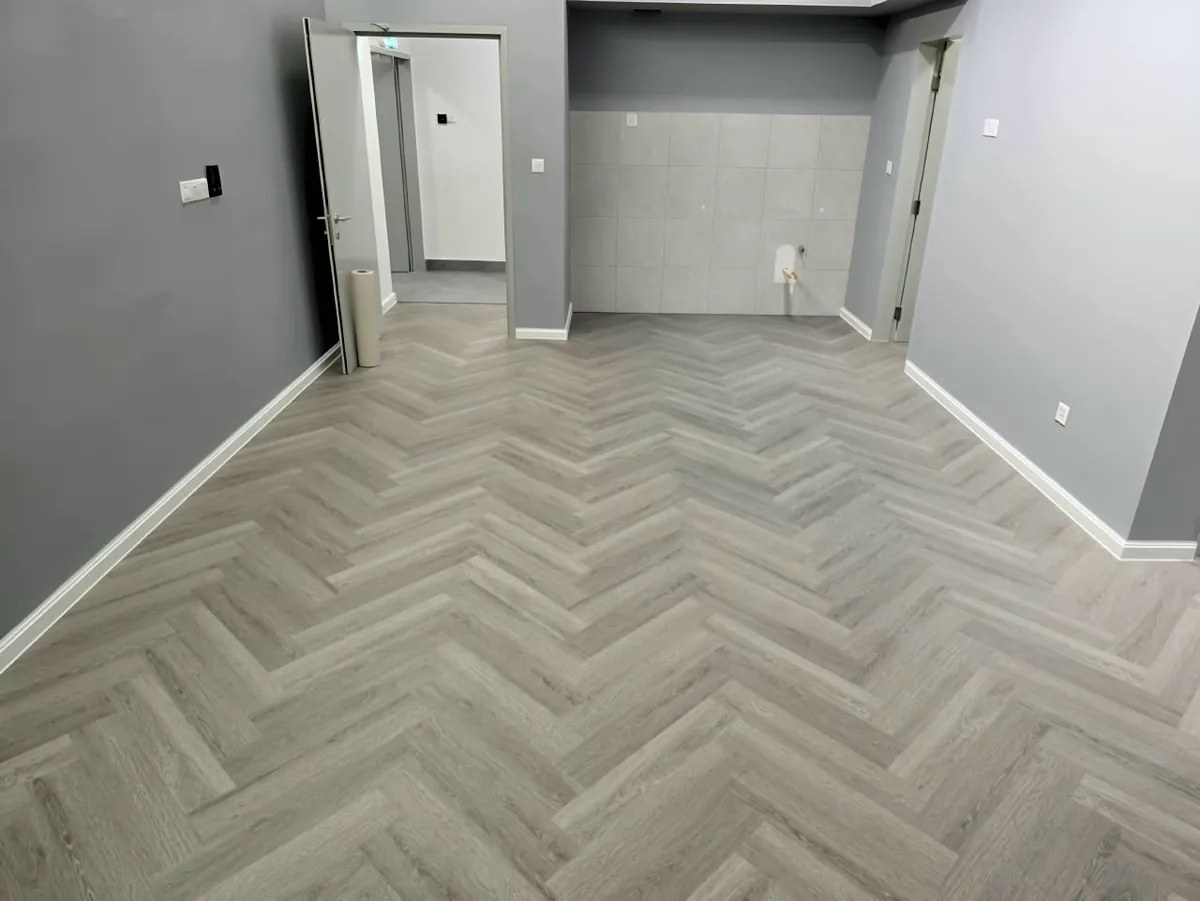
A shoplot unit can become almost anything: a retail shop, a tuition centre, a clinic, a salon, an office or a small studio. That flexibility is part of the appeal, but it also means there’s no single right way to floor one. If you’re planning vinyl flooring installation in Sri Petaling for a shoplot, the most useful work happens before anyone measures up: deciding how the space will be used, finding out what your landlord or building allows, and working out how materials and installers will actually get in.
Every unit, landlord and building is different, so treat each point below as something to check, not a rule.
Lantai Living supplies and installs vinyl flooring from our base in Petaling Jaya, and Sri Petaling is one of our service areas.
Planning vinyl flooring installation in a Sri Petaling shoplot
Before you look at samples, write down four things about your unit:
- Which floor it’s on. A ground-floor unit with a street frontage and an upper-floor unit reached by stairs raise quite different questions.
- What it will be used for. The intended use shapes which product makes sense, so tell your installer early.
- Whether you own or rent. If you rent, your tenancy agreement and your landlord’s consent come first.
- What’s on the floor now. Tiles, old vinyl, carpet tiles, bare screed or a mix left by a previous tenant.
Vinyl comes as planks, tiles and sheet, laid with click-lock, glue-down or other methods. Which suits your shoplot depends on the product and the floor underneath, so ask your installer why they recommend a particular format. If you’re also weighing up SPC, our guide to SPC flooring for shops covers what to check before buying.
Match the floor to how the unit will be used
The same shoplot can need a very different floor depending on what happens inside it:
- Retail. Think about footfall at the entrance and counter, trolleys and how often the floor will be mopped. Ask whether the product is intended for commercial use.
- Tuition centres and classrooms. Chairs and tables get moved all day, so ask about protective furniture glides.
- Clinics and salons. Ask which cleaning products and disinfectants the floor can handle. Our guide to clinic and salon flooring goes into more detail.
- Offices. Ask what’s recommended for office chairs, and mark any floor boxes that need cut-outs.
- Mixed use. If part of the unit is a pantry, storeroom or wash area, decide whether it’s included or stays tiled.
Questions for your landlord or management
First, find out who you need to deal with: an individual owner, a management office, or both. Then ask:
- Can the floor be changed? Check your tenancy agreement, and ask whether your landlord needs to see the product or installation method first.
- Do you need to reinstate it? Ask whether you’ll have to restore the original floor when you move out, as this may affect which product and method you choose.
- Applications and deposits. Ask whether a renovation application, deposit or other approval is needed, and who arranges it.
- Permitted working times. Ask when renovation work is allowed, and whether noisy work such as hacking out tiles is restricted.
- Disposal. Ask where old flooring, packaging and offcuts can go.
Get the answers in writing and pass them on to your installer.
Access, parking and loading: check before the date is set
This is where a shoplot job can differ most from a home. Before installation day, walk the route from the road to your unit and note:
- Where a van can stop. Is there a back lane, a loading spot or a nearby parking bay? Ask your landlord or management whether unloading needs to be arranged in advance.
- The way in. Will materials come through the front or the back? Check that the shutter or door can open fully.
- Keeping materials on site. Ask whether the product needs to sit in the unit before installation and for how long, and plan a secure, dry place to store it.
- Your neighbours. Let the units next door know when to expect deliveries, noise or dust.
Upper-floor units
- Stairs or lift. Check whether there’s a lift or only a staircase. Note any tight turns, and send a photo.
- Shared stairways. If the staircase is shared, ask your landlord whether it needs protecting.
- Who’s below you. If the unit underneath is occupied, ask whether noisy work needs to be timed around them, and whether an acoustic underlay is recommended for your product.
Ground-floor units
Ask how the new floor will meet the five-foot way or entrance step, whether doors and shutters will still clear it, and what the product’s instructions say about water near the entrance on rainy days.

What's under the floor now
The existing floor shapes the job, so ask your installer to check it on site before the final quotation.
- Existing tiles. Whether they can stay depends on their condition and on the product’s installation instructions. Point out any cracked or hollow-sounding tiles. We cover this in Can SPC flooring be installed over existing tiles?
- A previous tenant’s fit-out. Old vinyl, carpet tiles, adhesive residue or raised platforms all need a plan. Ask how each will be dealt with and whether it’s in the quotation.
- Changes in level. Check for steps or slopes within the unit, and ask how they’ll be handled. How flat the floor needs to be depends on the product.
- Signs of damp. If you notice stains or tide marks on the floor or at the base of walls, point them out and ask whether they need looking at first.
Fitting flooring into your shoplot renovation timeline
Flooring is rarely the only trade in a shoplot fit-out, so agree where it fits before you book a date.
- Order of works. Ask your designer or main contractor where flooring sits alongside ceiling, electrical, painting and carpentry work. Our shop and café renovation flooring checklist shows how the trades usually line up.
- Counters and built-ins. Ask whether, for your product, the floor should go under or around counters, shelving and partitions, and agree this with your carpenter.
- Getting back to business. Ask for a written schedule, including when shelves can be loaded. This depends on the product, the installation method and any preparation needed. If you have a handover or launch date, mention it at the start.
How to brief a quotation for a shoplot
The more your installer knows upfront, the closer the quotation will be to the real job. When you get in touch, send:
- A floor plan or measurements for each area. A hand sketch with dimensions is fine.
- Photos of the current floor, including wide shots and close-ups of any damage or uneven areas.
- The floor level and intended use, for example a ground-floor retail unit or a first-floor tuition centre.
- Which areas are included, and which aren’t.
- Access photos: the frontage, any back lane, the entrance and, for upper floors, the staircase.
- Landlord or management rules, including permitted working times.
- Your target date and any handover deadline.
- A colour direction, such as warm wood, light oak or cool grey.
When quotes come back, check that each lists material, preparation, removal, trims and disposal separately. Our guide to comparing flooring quotes walks through what each line should cover.
Working with Lantai Living in Sri Petaling
Lantai Living is based in Petaling Jaya, Selangor. We supply and install SPC and vinyl flooring for homeowners, renovation contractors and interior designers. Our service areas are Petaling Jaya, Shah Alam, Bukit Jelutong, Subang Jaya, Bandar Sunway, Puchong, Sri Petaling, OUG, Klang and the wider Klang Valley.
Every Lantai Living job includes installation, so we supply and install vinyl flooring for shoplots in Sri Petaling. If you’re fitting out a unit, or handling one as a contractor or designer, tell us about the space.
Product details, specifications and pricing are available on request. Send us your floor plan and photos, and we’ll talk through your options and prepare a quotation.
Frequently asked questions
Do you supply and install vinyl flooring in Sri Petaling?
Yes. Sri Petaling is one of our service areas, and every Lantai Living job includes installation. Send us your floor plan and photos for a quotation.
Can vinyl flooring be installed in an upper-floor shoplot with only a staircase?
It depends on the access and the job. Send your installer photos of the staircase and entrance so they can plan how materials will be carried up, and ask your landlord whether shared stairs need protecting.
Do I need my landlord's approval to change the flooring in a rented shoplot?
Check your tenancy agreement and ask your landlord in writing before you book a date. Ask whether they need to see the product or method first, and whether you’ll need to restore the original floor when you move out.
Which type of vinyl flooring suits a shoplot?
It depends on how the unit will be used, what’s on the floor now and the product itself. Tell your installer the intended use and send photos of the current floor, and ask them to explain why they recommend a particular format.
How do I get a quotation from Lantai Living?
WhatsApp us at +60 12-923 6383 with your floor plan or measurements, photos of the current floor and entrance, the floor level of your unit and your target date.
Let's talk about your space
A shoplot floor has to work for your business, your landlord and the route in from the street. Send us your floor plan, photos and timing, and we’ll help you work out what your Sri Petaling job involves.
Good living starts from the floor.