
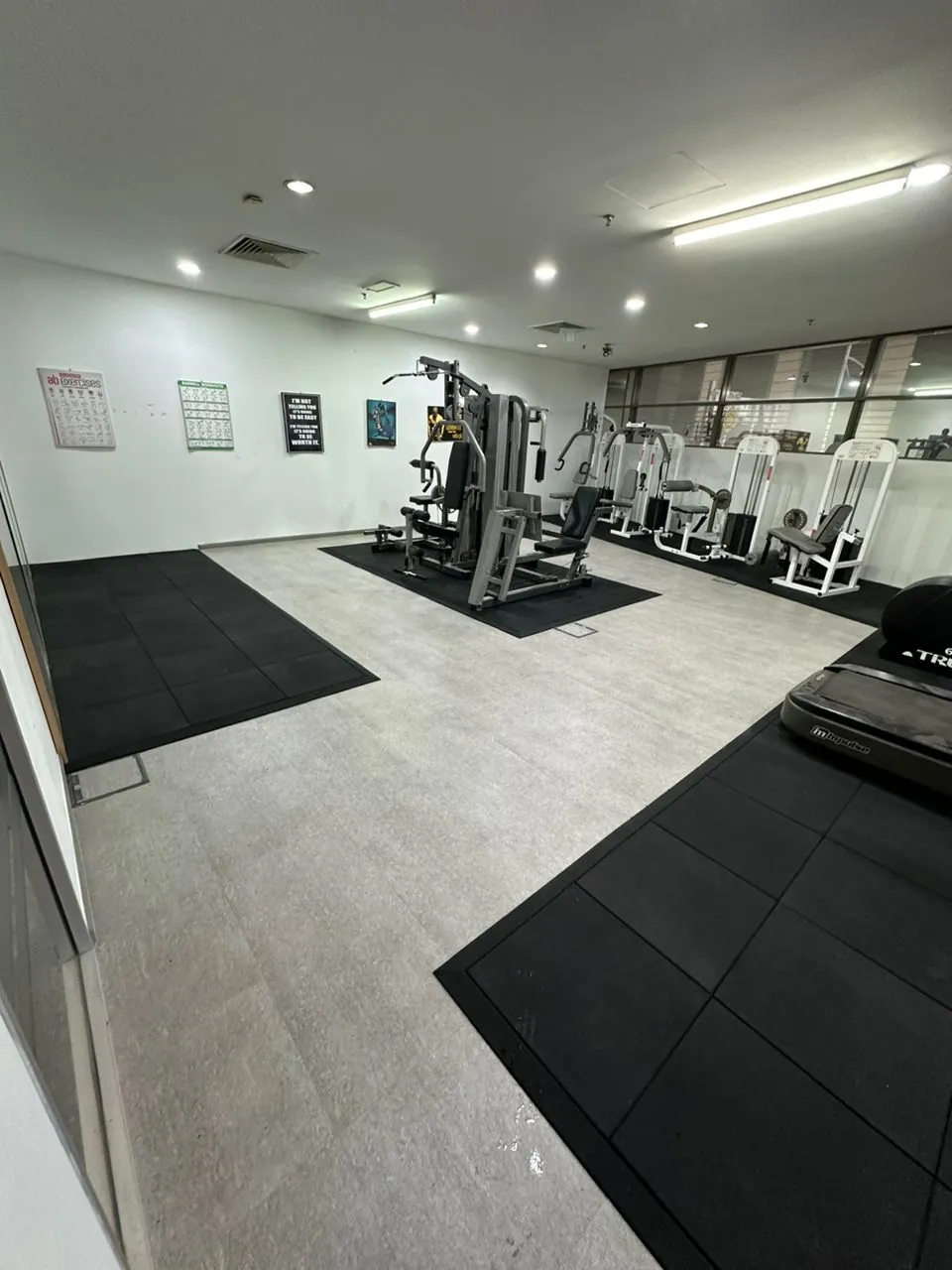
A gym floor has a harder life than almost any other floor. It takes dropped dumbbells, heavy machines, sweat, sliding benches and a steady stream of trainers’ shoes from early morning to late at night. Choosing one material for the whole space rarely works well. Most good fitness floors in Malaysia are a mix: a hard-wearing vinyl for walkways and studio areas, and rubber mats where the heavy work happens.
This guide is based on the kind of gym job we see in the Klang Valley, where an old floor was replaced with light grey stone-look vinyl and black rubber mat zones. It covers when each material makes sense, how to zone the space and what to check on the base floor before anything goes down.
Planning a gym or fitness studio floor?
Send us a rough layout, the approximate sqft and photos of the current floor. We’ll suggest how to split the space between vinyl and rubber.
Vinyl vs Rubber Mats at a Glance
| Commercial vinyl | Rubber gym mats | |
|---|---|---|
| Best for | Aisles, cardio zones, studios, reception, changing-room corridors | Free weights, lifting platforms, racks, under heavy machines |
| Impact | Not designed for dropped weights | Absorbs impact and helps protect the slab |
| Cleaning | Easy to sweep and mop | Needs vacuuming and a mild cleaner; textured surfaces hold dust |
| Look | Clean, bright, many stone and wood designs | Usually black or speckled, very “gym” |
| Comfort underfoot | Smooth and firm | Firmer grip, more cushion |
| Noise | Can be noisy if weights are dropped | Reduces impact noise, helpful in shoplots and upper floors |
When Rubber Mats Are the Right Choice
Rubber is the workhorse of any serious gym. It belongs anywhere a weight might be dropped, set down hard or rolled:
- Free-weight areas and dumbbell racks
- Squat racks, power racks and lifting platforms
- Under selectorised machines and multi-gyms, which are heavy and vibrate in use
- Functional training areas with kettlebells, slam balls and sleds
Rubber mats come in different thicknesses and densities. Thicker, denser mats are generally used where heavier weights are dropped, while thinner mats can be enough under machines. The right choice depends on the training style and the product’s own specification, so it is worth discussing how the space will actually be used.

When Vinyl Works Better
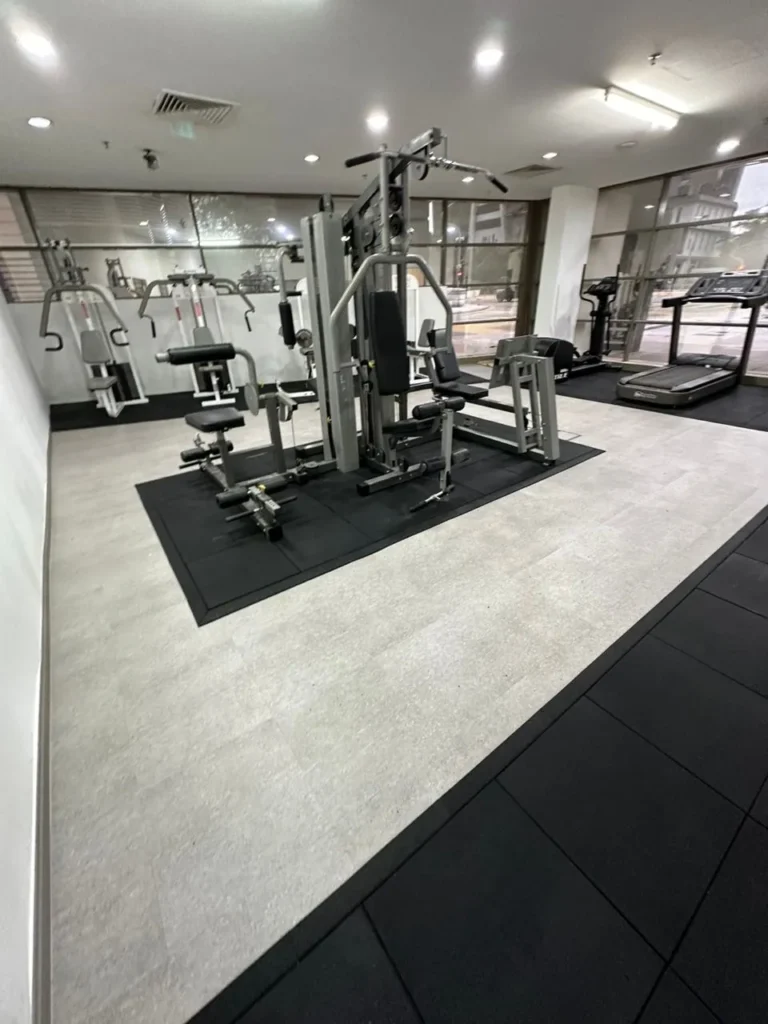
Not every part of a gym needs rubber. In the project shown here, a light grey stone-look vinyl runs through the walkways and around the cardio area by the windows. Vinyl suits:
- Main walkways and aisles between equipment zones
- Treadmill, bike and cross-trainer areas
- Group class or stretching studios (with suitable mats on top for floor work)
- Reception, lounge and corridor areas
Vinyl is quick to clean, keeps the space bright and makes a gym feel more like a premium studio than a warehouse. It is not built to take dropped plates, so it should stop where the heavy lifting starts. If you are weighing up different hard floors, our guide to SPC vs vinyl flooring explains how the two families differ. In this gym, the hard floor is vinyl, not SPC.
Zoning a Fitness Space
Good zoning makes a gym safer and easier to clean. A simple approach:
- Heavy zone: rubber mats under racks, platforms and free weights.
- Machine zone: rubber under heavy machines, vinyl around them for walking space.
- Cardio zone: vinyl, often near windows, with equipment mats where the supplier recommends them.
- Movement zone: vinyl or suitable studio flooring for classes and stretching.
- Front of house: vinyl that matches the brand look and handles wet shoes at the entrance.
Think about where the edges meet. Transitions between rubber and vinyl should be flat or properly trimmed so nobody trips carrying a weight. Changes in height are one of the details that separate a tidy job from a risky one.
Not sure where the rubber should stop and the vinyl should start?
WhatsApp us a floor plan or a few photos with the equipment marked. We’ll suggest a zoning plan before you commit.
Checking the Base Floor First
Most gym floor problems start underneath. Before installation, the base should be checked for:
- Flatness. Vinyl shows dips and bumps; rubber mats can rock or lift at the edges on an uneven slab.
- Moisture. Ground-floor shoplots and older buildings can have damp slabs. Moisture can affect adhesives and cause problems over time.
- Old finishes. Carpet, loose tiles or old adhesive usually need to come up. Old marble that is sound and flat can sometimes stay as a base for vinyl, depending on the product and the installer’s checks.
- Cracks and holes. These should be repaired before anything goes down.
Our step-by-step look at the flooring installation process explains what preparation usually involves, and most of it applies to vinyl jobs too.
Planning Around Opening Hours
Gyms do not like closing. Talk to your installer early about:
- Installing in phases, one zone at a time, so part of the gym can stay open
- Night or weekend work, and any building management rules on noise and access
- Where equipment will be moved while each zone is done
- How soon each area can be used again after installation
For commercial spaces in general, our SPC flooring for shops guide covers foot traffic, entrances and trading-hour installs, and our Kuala Lumpur and Selangor flooring guide gives an overview of the materials we install. To see the options we install, visit our vinyl flooring page, or contact us to arrange a site visit.
Kitting out your trainers and front-desk team too? For gym staff uniforms and printed jerseys in Selangor, see our sister company Selangor Print.
Gym Flooring Checklist
- Floor plan with equipment positions marked
- Heavy, machine, cardio and studio zones agreed
- Rubber thickness chosen for the heaviest use in each zone
- Vinyl design and grade suited to commercial traffic
- Base floor checked for flatness, moisture and old finishes
- Transitions between zones planned to be flat or trimmed
- Installation phases agreed around opening hours
- Cleaning routine set for both rubber and vinyl areas
FAQ
What is the best flooring for a gym in Malaysia?
Most gyms use a combination. Rubber mats for weights and heavy machines, and a commercial vinyl for walkways, cardio and studio areas. The split depends on how the space will be used.
Can vinyl flooring be used under weights?
It is not a good idea where weights are dropped or racked. Vinyl is better for walking and cardio areas. Use rubber mats where heavy impact happens.
Can gym flooring be laid over old marble or tiles?
Sometimes. If the old floor is sound, flat and dry, it may work as a base, depending on the product. Loose tiles, carpet and damaged areas usually need attention first.
How do I clean a gym floor with vinyl and rubber?
Sweep or vacuum daily, then damp mop the vinyl with a mild cleaner. Rubber mats usually need vacuuming and a mild, suitable cleaner. Follow each product’s care guide.
Is the grey floor in your gym photos SPC?
No. The light grey stone-look floor in these gym photos is vinyl, and the black areas are rubber mats.
Related guides
Get Advice for Your Gym Floor
Send us these on WhatsApp and we’ll reply with the next steps:
- Your area (e.g. PJ, Subang, Shah Alam, KL)
- Type of space (commercial gym, studio, condo gym, home gym)
- Approx sqft and a rough layout
- Current floor (carpet, tiles, marble, cement, other)
- Main training style (weights, machines, cardio, classes)
- 2–3 photos of the space
What happens after you WhatsApp us
Reply → site visit → zoning plan → quote
- We reply with questions about how the space is used.
- We arrange a site visit in the Klang Valley to measure and check the base.
- We suggest a zoning plan for vinyl and rubber.
- We send a quote with preparation and installation listed.
Supply and install across the Klang Valley, with phased installs available for running gyms.