

A deck can turn an unused side yard, a bare concrete patio or a corner of the garden into the most used part of a home. In Malaysia, though, outdoor floors face strong sun, heavy afternoon rain, humidity and the occasional flash flood. A deck that looks great in a showroom can disappoint quickly if the basics underneath are not right.
This guide covers what to check before you build a deck at a landed home, from sun and drainage to the subframe and the questions worth asking your installer, and compares composite (WPC) boards with natural timber for our climate. Most of our outdoor decking jobs use WPC (wood-plastic composite) boards, so that is the main focus here.
Thinking about a deck for your patio or garden?
Send us photos of the area, rough measurements and whether it is covered or open. We’ll tell you what to check first.
Decking Checks at a Glance
| What to check | Why it matters | Ask your installer |
|---|---|---|
| Sun exposure | Boards get hot and colours can fade in direct sun | How hot does this board get, and how does it age in the sun? |
| Rain and drainage | Standing water under a deck causes problems over time | Where will the water go? Is there a fall on the base? |
| Base | Soil, concrete or old tiles all need different treatment | Will you build on the existing slab or prepare a new base? |
| Subframe | It carries the deck; it must suit outdoor conditions | What is the joist material, spacing and fixing method? |
| Gaps and movement | Boards expand and contract with heat | What gap do you leave between boards and at walls? |
| Covered or open | Affects heat, rain and maintenance | Which board suits a covered area versus open sun? |
Sun, Rain and the Malaysian Climate
Our weather is hard on outdoor floors. A west-facing patio can take strong afternoon sun for hours, and the same space can be soaked by a thunderstorm an hour later.
- Heat. Darker boards usually feel hotter underfoot in direct sun. If children or pets will use the deck barefoot, consider lighter colours or some shade.
- Fading. Most outdoor materials change colour slightly as they weather. Ask what to expect over time, and view samples outdoors, not under shop lights.
- Rain. Decking should shed water quickly. Boards are usually laid with small gaps so rain can run through, and the base below needs somewhere for that water to go.
- Humidity and shade. Areas that stay damp and shaded can grow moss or algae on any surface. Regular sweeping and occasional washing help.
Covered or Open: It Makes a Difference
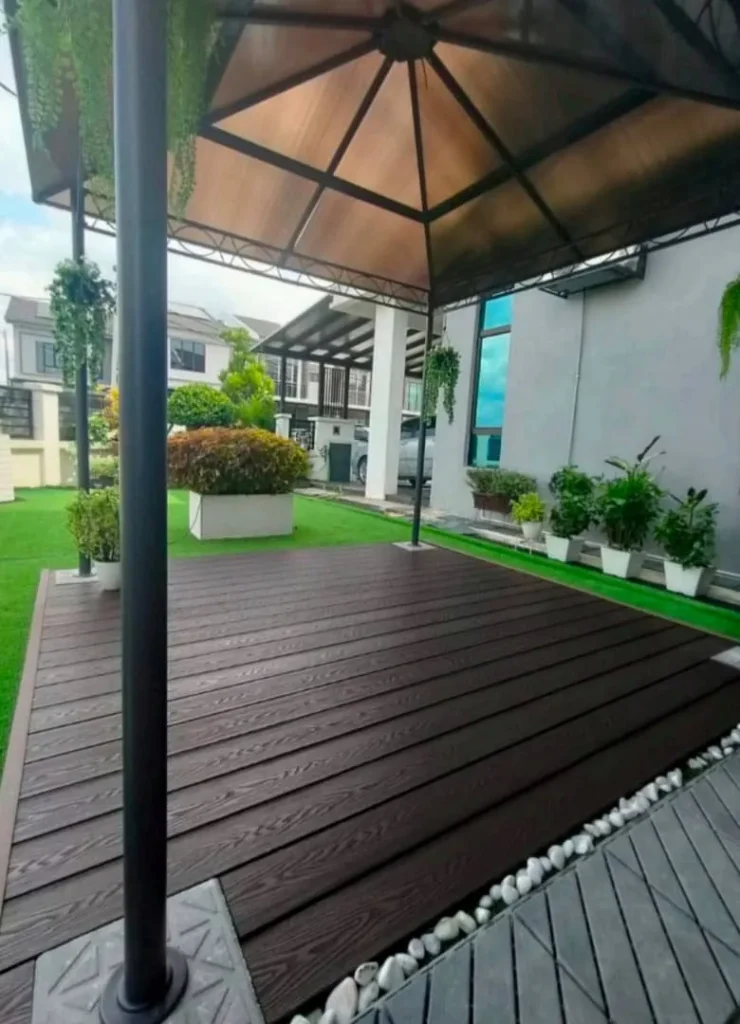
A covered patio, porch or gazebo is a gentler environment than open ground. Boards stay cooler, dry faster and fade less. Many homeowners in Shah Alam, Puchong and Subang first deck the covered area beside the living room, then extend into the garden later.
For open areas, choose boards rated for full outdoor exposure and plan the drainage carefully. Where a deck meets the house, check that rain from the roof does not pour directly onto it.
The Base and Subframe: What Holds It All Up
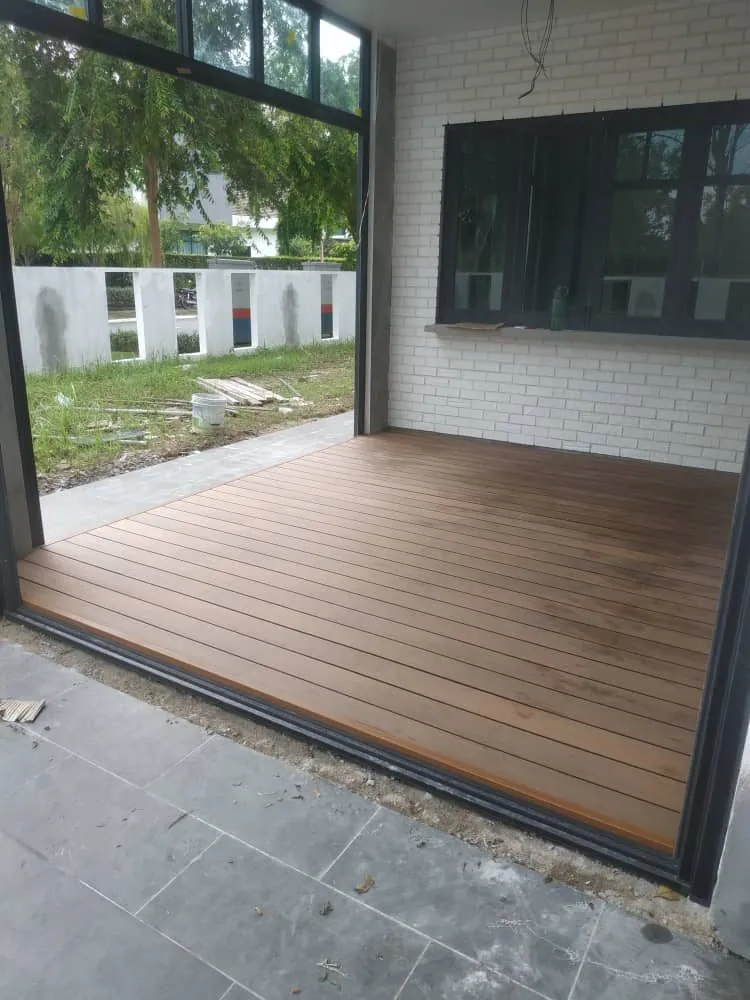
The part you never see decides how long a deck lasts. The boards sit on a subframe of joists, which in turn sits on the base.
The base. Many decks in Klang Valley landed homes are built over an existing concrete slab or old tiles. That can work well if the base is sound and water can drain off it. On soil, a proper base needs to be prepared so the deck does not sink or stay wet underneath.
The subframe. Ask what the joists are made of, how far apart they are and how they are fixed. Joist spacing needs to suit the boards, and the material should be suitable for outdoor use. A subframe that sags or rots will ruin even the best boards.
Gaps and fixings. Composite boards expand and contract with heat. Installers leave gaps between boards and at walls for this movement. Hidden clip systems give a cleaner look; face screws are sometimes used at edges. Either way, follow the board maker’s guidelines.
Not sure if your patio slab can take a deck?
WhatsApp us photos of the base, including any cracks, drains and where rainwater flows. We’ll tell you what may need preparing.
Composite (WPC) vs Natural Timber
Natural timber decks look beautiful but generally need regular oiling or sealing in our climate, and some species are prone to rot or termites if not maintained. Composite or WPC boards are made to look like wood with less upkeep. They do not need oiling, but they still need sweeping and occasional washing, and they can still get hot in the sun.
Neither is maintenance-free. The right choice depends on how you use the space, how much upkeep you want and the specific product’s terms.
Edges, Steps and Combining With Grass
Good details make a deck feel finished. Think about:
- Edges and fascia boards to hide the subframe
- Steps if the deck is raised above the garden level
- Transitions to artificial grass, pebbles or tiles
- Lighting set into steps or edges, planned before the boards go down
Many of our projects combine decking with artificial grass for a play or lawn area. Our room-by-room guide to flooring for landed homes shows how indoor and outdoor areas can flow together.
Questions to Ask Your Decking Installer
- Which board do you recommend for this area, and why?
- What is the subframe made of, and what joist spacing will you use?
- How will rainwater drain off and under the deck?
- Will you build on the existing slab, or prepare a new base?
- What gaps will you leave for expansion?
- How should I clean and maintain it?
- What are the product warranty and workmanship terms, in writing?
Warranty terms depend on the product and supplier, and outdoor products often have specific conditions. Our warranty questions guide is written for SPC, but most of the same questions apply to decking. For an overview of all our indoor and outdoor services, see the KL and Selangor flooring guide. When you are ready, see our outdoor decking installation service, or contact us to arrange a site visit.
FAQ
What is the best outdoor decking material in Malaysia?
Composite (WPC) decking is popular because it needs less upkeep than natural timber in our hot, wet climate. The best choice depends on sun exposure, how the area is used and the product’s specifications.
Does composite decking get hot?
It can, especially darker colours in direct afternoon sun. Lighter colours and shade help. View samples outdoors before choosing.
Can decking be installed over an existing concrete patio or tiles?
Often, yes, if the base is sound and water can drain off it. The installer should check the slab, falls and drainage first.
How do I maintain outdoor decking?
Sweep regularly, wash occasionally with water and a mild cleaner, and keep gaps clear of leaves and debris. Follow the product’s care guide.
Is decking suitable for open areas, or only covered patios?
It can work in both, but open areas need boards suited to full exposure and careful drainage planning.
Related guides
- Which Floor for Which Room? A Flooring Guide for KL & Selangor Renovations
- SPC Flooring for Landed Homes: A Room-by-Room Planning Guide
- SPC Flooring Warranty: Questions to Ask Before Paying a Deposit
- Outdoor Decking vs Artificial Grass vs Tiles: Choosing Your Patio Surface
- How to Maintain Outdoor Decking in Malaysian Weather
Plan Your Outdoor Deck
Send us these on WhatsApp and we’ll reply with the next steps:
- Your area (e.g. Shah Alam, Puchong, Subang, Klang)
- Where the deck will go (patio, garden, gazebo, side yard)
- Approx size (length × width)
- Current base (soil, concrete, tiles)
- Covered or open to the sky
- 2–3 photos of the area
What happens after you WhatsApp us
Reply → site visit → design → quote
- We reply with questions about the space and how you will use it.
- We arrange a site visit in the Klang Valley to check the base and drainage.
- We suggest board options and layout.
- We send a quote listing base work, subframe, boards and trims.
Outdoor decking, artificial grass and indoor flooring across the Klang Valley.